
In professional food service, the way food is presented often matters just as much as the food itself. From catering events and hotel banquets to tasting menus and brand sampling activities, small-format dishes have become an essential tool for creating organized, efficient, and visually appealing food experiences.
Mini appetizer and tasting dishes are no longer a novelty. They are now widely used across the hospitality and catering industry to support portion control, service efficiency, and consistent presentation — especially in environments where food needs to be served at scale.
This article explores how catering professionals, event planners, and food service buyers use mini appetizer and tasting dishes in real-world scenarios. Rather than focusing on recipes, we look at pairing logic, serving structure, and practical considerations that help turn small bites into a polished, professional experience.
Why Mini Appetizer Matter in Professional Food Service
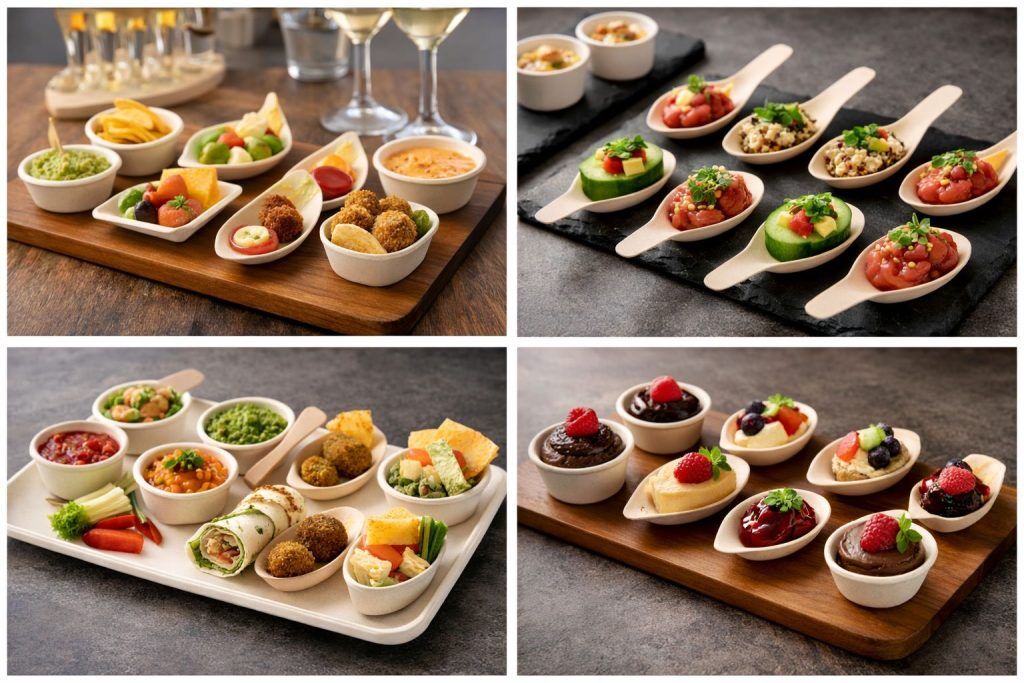
Over the past decade, food service has gradually shifted toward smaller portions, sampling-style menus, and flexible serving formats. This trend is driven by several factors: changing dining habits, the growth of experiential events, and the need for faster, more efficient service models.
Mini dishes support these changes in ways that traditional plates often cannot. By offering pre-portioned servings, they allow catering teams to maintain consistency across hundreds — or even thousands — of guests. At the same time, they help avoid overcrowded plates and reduce food waste.
In professional settings, mini appetizer and tasting dishes are rarely about indulgence. They are about control, clarity, and execution. Each dish serves a specific role in the overall flow of service, whether it is a welcome bite, a tasting sample, or a small accompaniment to drinks.
Beyond Food: The Role of Mini Dishes in Catering & Event Presentation
Portion Control and Consistency at Scale
One of the biggest challenges in catering and banquet service is consistency. When multiple staff members are plating food simultaneously, even small variations can disrupt the visual harmony of an event.
Mini dishes naturally limit portion size, which helps standardize servings across the board. This is particularly important for tasting menus and sampling events, where guests expect each portion to be uniform. Consistent portions also make it easier to calculate quantities, manage inventory, and reduce unexpected shortages or waste.
Faster Service and Easier Handling

In many professional settings, guests are standing, moving, and interacting. Mini dishes are designed to be held comfortably in one hand, making them ideal for cocktail receptions, exhibitions, and networking events.
From a service perspective, smaller dishes are quicker to plate, easier to transport, and simpler to distribute. This can significantly reduce service time and staffing pressure, especially during peak periods.
Disposable Convenience with a Premium Look
Disposable does not have to mean low-end. In recent years, compostable molded fiber dishes have become a preferred option for many catering professionals because they combine convenience with a clean, natural appearance.
Mini appetizer dishes made from molded fiber offer a neutral backdrop for food while maintaining a refined, professional aesthetic. They eliminate the need for washing and reduce the risk of breakage, without compromising presentation quality.
Creative Pairing Logic: How Professionals Build Tasting Menus
When catering teams design tasting menus or appetizer assortments, they typically focus on balance rather than complexity. The goal is not to showcase elaborate recipes, but to create a sequence of small bites that feel intentional and well-structured.
Below are some common pairing logics used in professional food service, regardless of regional cuisine.
Creamy and Crunchy: Texture Contrast Pairings
Texture contrast is one of the most reliable principles in appetizer design. Creamy spreads or dips are often paired with crisp or baked finger foods to create a satisfying mouthfeel.
Mini bowls or leaf-shaped dishes work well for this pairing, as they provide enough depth for sauces while keeping portions controlled. This approach is frequently used in reception-style events, where guests may sample several different items in a short time.
Fresh and Light Bites for Sampling Events
For daytime events, exhibitions, and product launches, lighter food options are often preferred. Cold appetizers and fresh components help keep guests engaged without overwhelming them.
Mini spoons and shallow tasting dishes are commonly used in these scenarios. They allow for precise portions and clean presentation, making them ideal for food sampling where visual clarity is important.
Savory Small Bites for Cocktail and Evening Events
In evening settings, savory bites tend to be more substantial, though still designed for one or two bites. These items are typically served warm or at room temperature and need to be easy to handle.
Mini spoons and oval plates are practical choices here, as they support structured plating while remaining easy for guests to carry. The focus is on comfort and flow rather than complexity.
Sweet Tastings and Dessert Samples
Dessert sampling has become increasingly popular in hotel banquets and tasting events. Individual portions allow guests to enjoy a sweet finish without committing to a full dessert.
Mini bowls and leaf-shaped dishes are often used for these applications, as they provide a sense of completeness while maintaining portion control. From a service standpoint, individual dessert samples also simplify distribution and reduce cleanup.
Matching Dish Shapes to Serving Scenarios
Selecting the right dish shape is less about style preferences and more about functionality. Each shape serves a different purpose in professional food service.
Leaf-Shaped Dishes
Leaf-shaped dishes are often chosen for visually driven presentations. Their organic form helps separate individual items and makes plated food feel intentional without additional decoration.
They are particularly suitable for appetizers, spreads, and small dessert samples where presentation plays a key role.
Mini Spoons
Mini spoons are one of the most efficient formats for tasting and sampling. They offer excellent portion control and are easy for guests to handle in standing environments.
Because of their shape, mini spoons naturally guide plating and reduce variation between servings, making them a favorite for high-volume events.
Small Bowls and Cups

Small bowls and cups provide stability and depth, making them suitable for sauces, warm items, and desserts. They are often used when the contents need to remain contained during movement or service.
From a logistics perspective, bowls also stack well, which helps with storage and transportation.
Why Compostable Mini Dishes Are Preferred in Modern Catering
Sustainability has become a practical consideration rather than a marketing statement in many food service operations. Clients increasingly expect catering providers to offer environmentally responsible solutions without sacrificing efficiency.
Compostable mini dishes made from molded fiber support this shift by offering single-use hygiene, simplified cleanup, and reduced environmental impact. They eliminate the need for water-intensive washing while aligning with sustainability goals that many venues and brands now prioritize.
For catering companies, this combination of practicality and environmental responsibility makes compostable mini dishes a natural choice for modern events.
Practical Tips for Catering Buyers and Event Planners
When selecting mini appetizer and tasting dishes, experienced buyers often consider more than just appearance. Some practical factors include:
- Choosing dish size based on serving time and event duration
- Limiting the number of shapes to maintain visual consistency
- Selecting neutral colors that work across different menus
- Considering stackability and transport efficiency
- Matching dish depth to the type of food being served
These considerations help ensure that mini dishes support, rather than complicate, event execution.
Conclusion: Small Dishes, Big Impact on Food Presentation
Mini appetizer and tasting dishes play a quiet but essential role in professional food service. They support portion control, streamline service, and elevate presentation — all while offering the convenience required for large-scale events.
Rather than following trends, many catering professionals now view mini dishes as a practical tool that improves efficiency and consistency. When chosen thoughtfully, they help transform simple food items into a cohesive, professional experience.
If you are planning catering events, tasting menus, or food sampling projects and are looking for compostable mini serving solutions, feel free to contact us to discuss samples or suitable options for your specific application.