
In the modern marketplace, a package is never just a package. It is a silent salesman, a brand ambassador, and—perhaps most importantly—a physical manifestation of a company’s soul.
For decades, the conversation around sustainable packaging was dominated by the concept of “sacrifice.” Brands believed they had to sacrifice aesthetics for ethics, or profit margins for the planet. But as we move through 2026, a massive psychological pivot has occurred in the global consumer consciousness. This phenomenon is known as the “Green Halo” Effect.
For brands partnering with InNature Pack, this effect isn’t just a marketing buzzword; it’s a measurable driver of customer loyalty, a powerful justification for premium pricing, and a signal of cutting-edge innovation.
Deep Dive: What is the “Green Halo” Effect?
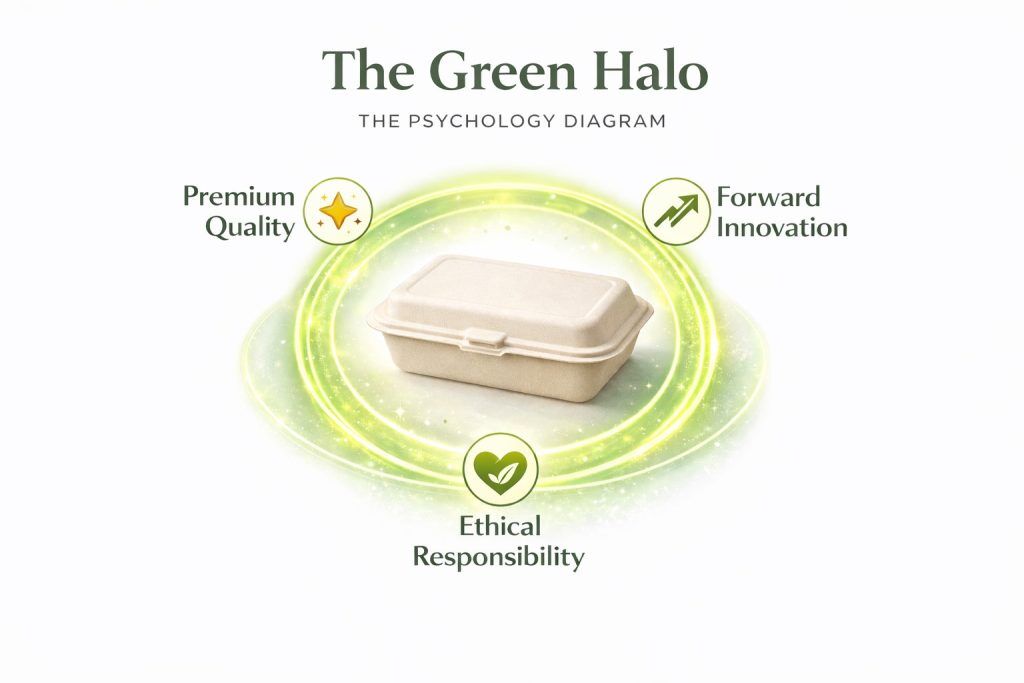
The “Green Halo” is a cognitive bias where a consumer’s perception of one positive ethical trait (eco-friendliness) spills over to influence their opinion of other, technically unrelated attributes. When a customer holds a container made of molded sugarcane bagasse or a textured bamboo fiber box, their brain doesn’t just register “recyclable.” It triggers a complex chain of positive associations:
A. The Quality Inference
Psychologically, consumers apply a “halo” of high quality to sustainable products. The logic follows: “If this company invested the time and resources to source premium, natural fibers rather than cheap, generic plastic, they must have applied that same level of care to the product inside.” This elevates the perceived craftsmanship of your entire offering.
B. The Innovation Signal
Sustainability in 2026 is synonymous with Innovation. Using agricultural by-products like sugarcane pulp to create moisture-resistant, microwave-safe, and structurally rigid packaging is a feat of modern material science. It tells the consumer that your brand is a forward-thinking leader, not a legacy player stuck in the “Petrochemical Age.”
C. Corporate Social Responsibility (CSR)
The Green Halo serves as “shorthand” for corporate ethics. In a world of complex supply chains, the packaging is the only part of your CSR strategy the customer can actually touch. It validates your brand as an ethical actor without you needing to say a word.
The Economics of “Willingness to Pay” (WTP)
The most persistent myth in the packaging industry is that “green costs too much.” While the unit price of a plant-fiber bowl might be higher than a polystyrene one, the Value-to-Cost ratio is vastly superior.
The Rise of “Moral Convenience”
Consumers today face “Eco-Anxiety.” They want to enjoy their lifestyle—their gourmet takeout, their high-end skincare, their tech gadgets—but they hate the “trash guilt” that follows.
- The Solution: By providing a compostable or easily recyclable solution from InNature Pack, you are selling Moral Convenience.
- The Result: You aren’t just selling a product; you are selling an emotional release. Data consistently shows that over 70% of consumers are willing to pay a 10% to 25% premium for products that solve this internal moral conflict.
Pricing Power in a Crowded Market
When your product is wrapped in plastic, you are competing on price. When your product is encased in a custom-engineered, earth-friendly fiber solution, you are competing on Values. Values are much harder to commoditize, allowing your brand to maintain higher margins even when competitors are slashing prices.
Material Science: The Tangible Touch of Trust
At InNature Pack, we focus on materials that don’t just “do no harm,” but actually enhance the user experience. The “Green Halo” is most effective when it is tactile.
Sugarcane Bagasse: The Art of Upcycling

Sugarcane bagasse is the fibrous residue left after juice extraction. Instead of being burned (releasing carbon dioxide), we transform it into high-performance packaging.
- Texture & Feel: Unlike the sterile, “oily” feel of plastic, bagasse has a natural, matte, and premium organic texture.
- Functional Innovation: Our bagasse solutions are engineered for extreme temperatures, making them perfect for premium food brands that need to maintain heat without compromising structural integrity.
Bamboo Fiber: The Symbol of Resilience

Bamboo is one of the fastest-growing resources on the planet. Its long, tough fibers provide incredible strength-to-weight ratios. For luxury brands or electronics, bamboo fiber offers a sleek, modern aesthetic that screams “sophistication” and “durability.”
Recycled Pulp: The Logic of the Circular Economy

For brands that want to emphasize a “Heritage” or “Industrial” vibe, our high-grade recycled pulp provides a rugged, honest aesthetic. It speaks to a brand that is sensible, grounded, and resourceful.
Building “Stickiness”: Packaging as a Loyalty Tool
Customer acquisition is expensive; customer retention is where profit lives. Sustainable packaging is one of the most effective “loyalty hacks” available to modern brands.
The “Unboxing” as a Brand Ritual
In the era of TikTok and Instagram, the “unboxing” is a critical touchpoint.
- The Negative Experience: Imagine a customer ordering an organic, vegan face cream, only to find it encased in non-recyclable foam and plastic wrap. The “Green Halo” shatters instantly. The brand feels hypocritical.
- The InNature Experience: When the box opens to reveal custom-molded fiber inserts that fit perfectly and smell like natural earth, the brand promise is sealed. The customer feels a sense of relief and pride, which leads to…
User-Generated Content (UGC)

Eco-conscious consumers love to show off their “finds.” High-design sustainable packaging is “Instagrammable.” When your customers share photos of your packaging, they aren’t just promoting your product—they are performing their own identity as conscious consumers. This creates a community of loyalists who act as your unpaid marketing team.
Strategic Implementation: How to Maximize the Halo
To fully leverage the Green Halo effect, brands must be strategic about how they communicate their choice of InNature Pack materials.
A. Avoid “Greenwashing”
Consumers are savvy. They know the difference between “Degradable” (which often means micro-plastics) and “Compostable.” Be transparent. Use clear icons that explain the material—e.g., “Made from 100% Sugarcane Fiber.”
B. Highlight the “Why”
Don’t just use green packaging; tell the story. Mention the reduction in carbon dioxide or the diversion of agricultural waste. When you educate the consumer, you deepen their emotional investment in your brand.
C. Design for Reusability or Home Composting
If your packaging is so beautiful that a customer wants to reuse it, or so natural they can put it in their garden, you have achieved the ultimate level of brand “stickiness.”
The Future: Regulating for the Green Halo
It’s not just about consumer psychology; it’s about future-proofing. Governments worldwide are moving toward “Extended Producer Responsibility” (EPR) laws and plastic bans. Brands that adopt InNature Pack’s plant-fiber solutions now are not just gaining a “Green Halo” in the eyes of the consumer—they are gaining a Competitive Advantage by being ahead of the regulatory curve. While other brands will be scrambling to find plastic alternatives in a crisis, your brand will already be the established leader in the sustainable space.
Conclusion: The New Bottom Line
In 2026 and beyond, the most successful brands will be those that realize the “Bottom Line” isn’t just about the balance sheet—it’s about the Triple Bottom Line: People, Planet, and Profit.
The Green Halo Effect proves that these three pillars are not in conflict. By choosing innovative materials like sugarcane, bamboo, and recycled pulp, you are:
- Elevating your brand’s perceived quality and innovative spirit.
- Unlocking a higher “Willingness to Pay” from a loyal, conscious audience.
- Building a lasting emotional bond that survives market fluctuations.
At InNature Pack, we don’t just manufacture containers; we engineer the “Halo” that makes your brand shine.
Is your brand ready to step into the Green Halo?
Explore our Product Range or Request a Custom Design Consultation to see how we can turn your packaging into your most powerful marketing asset.