
Introduction: Sustainable Packaging Isn’t One-Size-Fits-All
In the fast-paced world of sustainable packaging, the spotlight often shines on the newest, sleekest technologies. We hear a lot about the “satin finishes” and “plastic-like precision” of premium fiber solutions. Because of this, it is easy to fall into the trap of thinking that traditional Dry Press Molded Pulp is simply a “lower-end” alternative.
At InNature Pack, we see it differently. Sustainable packaging isn’t about choosing the most expensive technology; it’s about choosing the right tool for the job.
For many industries—from heavy-duty electronics to high-volume agriculture—Dry Press isn’t just a budget-friendly backup; it is the superior choice for protection, scalability, and authentic “eco-branding.” Let’s dive into why this reliable workhorse remains the backbone of the green revolution.
What Is Dry Press Molded Pulp Packaging?
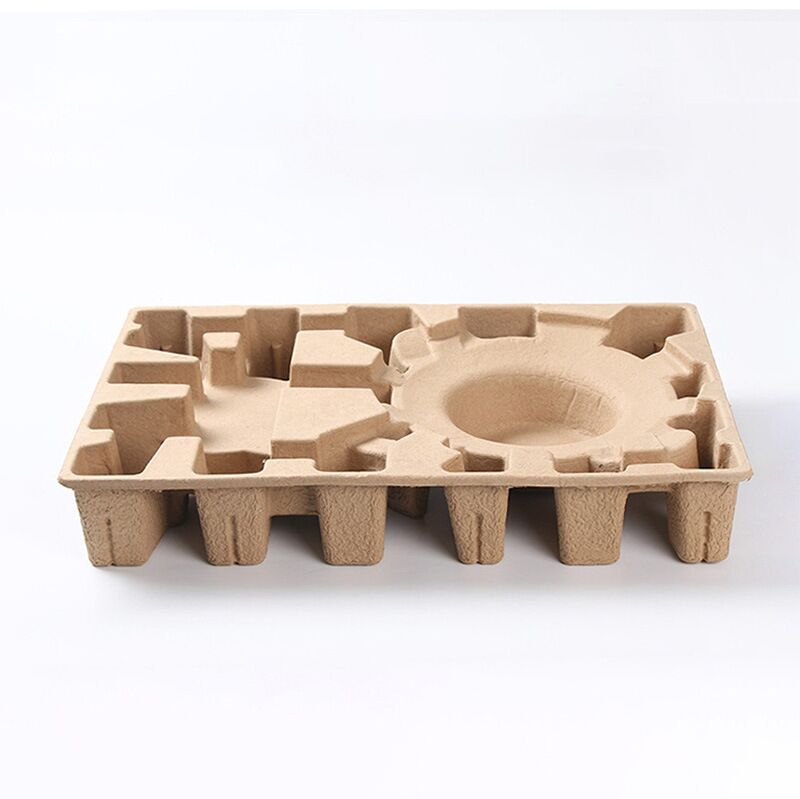
Dry Press molded pulp packaging is one of the most widely used forms of fiber packaging in the world. Egg cartons, industrial trays, fruit trays, and many protective inserts are produced using this process.
The manufacturing workflow is relatively straightforward:
- Pulp forming
- Drying
- Optional hot pressing or finishing
One common misconception is that Dry Press products are never hot pressed. In reality, many dry press trays still go through a light hot-pressing process to improve flatness or appearance. The key difference is that Dry Press products are not fully dried inside the mold, unlike Wet Press packaging.
Because of this, Dry Press packaging typically has:
- Thicker wall structures
- A more natural fiber texture
- Better cushioning properties
- Lower tooling and production costs
Dry Press packaging also works exceptionally well with recycled paper pulp, making it one of the most cost-effective forms of sustainable packaging available today.
Top 4 Scenarios: When Dry Press Wins
Choosing the right packaging is a balance of performance and price. Here are four scenarios where Dry Press is arguably the better choice for your business:
1. When Maximum Impact Protection is the Priority
If you are shipping heavy-duty industrial parts, large home appliances, or fragile ceramics, you don’t just need a “box”— you need a shock absorber.
Because Dry Press has a thicker wall (typically 2.0mm to 4.0mm) and a more “open” fiber structure, it acts as a natural cushion. It has a higher degree of “flex” than the high-density Wet Press. In the event of a drop during transit, the Dry Press structure collapses slightly to absorb the kinetic energy, keeping your product safe inside. If your product needs to pass rigorous ISTA Drop Tests, Dry Press is often your best ally.
2. High-Volume Cost Efficiency: The Logic of Speed and Tooling
In large-scale manufacturing, the primary goal is a balance between performance and the bottom line. However, at InNature Pack, we believe it’s important for our clients to understand why Dry Press offers such significant savings. It is not a compromise on quality, but rather an optimization of the production sequence.
The Efficiency of “Dry-to-Hot” Pressing
The core cost advantage of Dry Press lies in the Hot-Pressing Cycle. In our Dry Press line, the product is formed and then pre-dried (oven-dried or air-dried). By the time it reaches the hot-pressing stage, it is already nearly dry. This allows the hot-press cycle to be completed in just a few seconds.
In contrast, the Wet Press process involves pressing a completely wet embryo, which takes about 2 minutes to evaporate the moisture. By choosing Dry Press, you are significantly reducing energy consumption and increasing labor efficiency per hour, which directly translates to a lower unit price for your project.
Optimized Tooling Investment
This difference in cycle speed directly dictates the engineering of the molds:
- Cavity Optimization: Because the Dry Press hot-pressing stage is so rapid, a 1-out-1 (single cavity) hot-press mold is usually sufficient to maintain high output. Wet Press hot-press molds, however, must be engineered with multiple cavities (1-out-many) just to keep up with production demand, which significantly inflates the initial tooling budget.
- Material Flexibility: For Wet Press, even the forming upper molds often require heating, necessitating the use of Aluminum. In Dry Press, the forming molds can often be made from more cost-effective materials like ABS, providing a more budget-friendly entry point for new projects.
Simplified Post-Processing & Minimalist Options

Dry Press offers a level of flexibility that can strip away entire layers of cost:
- Optional Hot-Pressing: For purely industrial or agricultural applications, the product may not even require hot-pressing at all if the structural integrity from oven-drying meets the requirement.
- Eliminating the Trimming Stage: Many industrial projects do not require a Trimming Mold. By potentially removing the need for both hot-pressing and trimming molds, we can provide the most economical eco-friendly solution on the market.
3. The “Rustic & Organic” Brand Identity

Aesthetics are subjective. While some brands want their packaging to look like a smartphone box, others want their customers to feel the raw, organic power of nature the moment they touch the package.
Dry Press has an unmistakable texture that screams “Eco-Friendly.” For organic skincare, artisanal candles, or farm-to-table food brands, the slightly rough, fibrous surface of Dry Press tells an authentic story. It doesn’t try to look like plastic; it proudly looks like plants. In a world of over-polished marketing, that tactile honesty can be a powerful branding tool.
4. More Suitable for Large or Heavy Products
Large-format molded pulp packaging projects face a completely different set of engineering challenges compared to small retail packaging. As a sales manager, I often see clients struggling to find sustainable solutions for oversized items, and this is where Dry Press truly excels.
As product size increases, Wet Press (Thermoforming) tooling becomes significantly more complex and expensive. Moreover, the thin-wall structures inherent to Wet Press can become difficult to control consistently on oversized products, potentially compromising structural integrity.
Dry Press packaging is far more forgiving for larger formats. The process naturally supports the features required for heavy-duty protection:
- Thicker Structures: Providing a solid barrier against external impact.
- Reinforcement Ribs: Adding much-needed rigidity to large surface areas.
- Deeper Cushioning: Creating a longer “crush zone” to absorb energy during drops.
- Stronger Load-Bearing: Capable of supporting the weight of heavy machinery or stacked furniture.
This makes Dry Press the logical and most reliable choice for:
- Furniture & Appliance Protection: Corner guards and base trays that must withstand significant weight.
- Industrial Transport Trays: Reusable or recyclable trays for heavy components.
- Heavy Product Inserts: Ensuring equipment stays centered and secure within an outer carton.
For most industrial applications, the priority isn’t a “luxury” finish; it is reliable protection at a reasonable cost. Dry Press delivers exactly that—scale and strength without the prohibitive price tag of oversized precision tooling.
The InNature Advantage: Fine Dry Press & Premium Fibers
At InNature Pack, we believe that “traditional” doesn’t have to mean “rough.” We offer a middle ground often referred to as Fine Dry Press, where we bridge the gap between industrial utility and retail-ready aesthetics.
1. Precision Through “After-Pressing”
By adding a secondary “After-pressing” (Restacking) stage after the product has been oven-dried, we can significantly flatten the surfaces and sharpen the edges of a standard Dry Press part. This gives you the superior cushioning and cost-savings of the Dry Press process, but with a significantly cleaner, more professional presentation. It’s the perfect compromise for brands that need reliable protection but still want their inserts to look neat and tidy inside the box.
2. Beyond Recycled Paper: Premium Material Flexibility
Although Dry Press packaging is historically associated with brown recycled paper pulp, the process is no longer limited to industrial-only applications.
Today, many of our clients are choosing Sugarcane Bagasse or Bamboo Pulp for their Dry Press projects. Using these virgin plant fibers allows us to create packaging that:

- Looks Refined: Offers a cleaner, brighter, and more consistent color.
- Balances the Budget: Provides a much higher aesthetic appeal than recycled pulp while maintaining the cost-efficiency of the Dry Press production cycle.
- Elevates Brand Identity: Perfect for eco-conscious brands that want a “natural” look that still feels intentional and high-quality.
This material versatility gives your business the flexibility to balance sustainability, appearance, and budget without being forced into a more expensive thermoforming process if it isn’t functionally required.
Decision Matrix: Dry Press vs. Wet Press
To help you decide, ask your team these three questions:
| The Question | Choose Dry Press if… | Choose Wet Press if… |
| What is the primary goal? | Maximum protection and low cost. | High-end aesthetics and “satin” touch. |
| Where is it going? | Industrial, agricultural, or mass-market. | Luxury retail, cosmetics, or premium tech. |
| How much “cushion” is needed? | Significant (for heavy/fragile items). | Moderate (for lightweight/refined items). |
Conclusion: The Best Tool for Your Journey
There is no “best” process—only the best process for your specific product and your specific budget.
At InNature Pack, we don’t push one technology over the other. Our goal is to be your Sustainable Packaging Consultant. Whether you need the high-density elegance of a Thermoformed insert for a luxury perfume or the rugged, shock-absorbing reliability of a Dry Press tray for industrial parts, we have the engineering expertise to guide you.
Sustainability shouldn’t be a financial burden; it should be a competitive advantage. Let’s look at your product, your shipping route, and your brand goals together to find the perfect fit.
Ready to find your fit?
Contact InNature Pack team today for a feasibility study. We can provide samples of both Dry Press and Wet Press solutions so you can feel the difference for yourself.