
A molded pulp box can look beautifully simple from the outside, but its closure is often one of the first structural decisions a packaging team needs to make. It affects how securely the product stays inside, how easy the pack is to open, whether additional assembly is needed, and how premium the final result feels in the customer’s hands.
For some products, a clean friction-fit lid is all that is needed. For others, the packaging may need a visible locking point, a branded paper sleeve, or a magnetic close. There is no single “best” choice. The right answer depends on the product weight, the shipping route, the desired unboxing experience, the target price and whether the box is intended for single use or to be kept.
Below are five practical molded pulp box closure options and the design points worth considering before the mold is finalized.
1. Self-Closing Structural Design
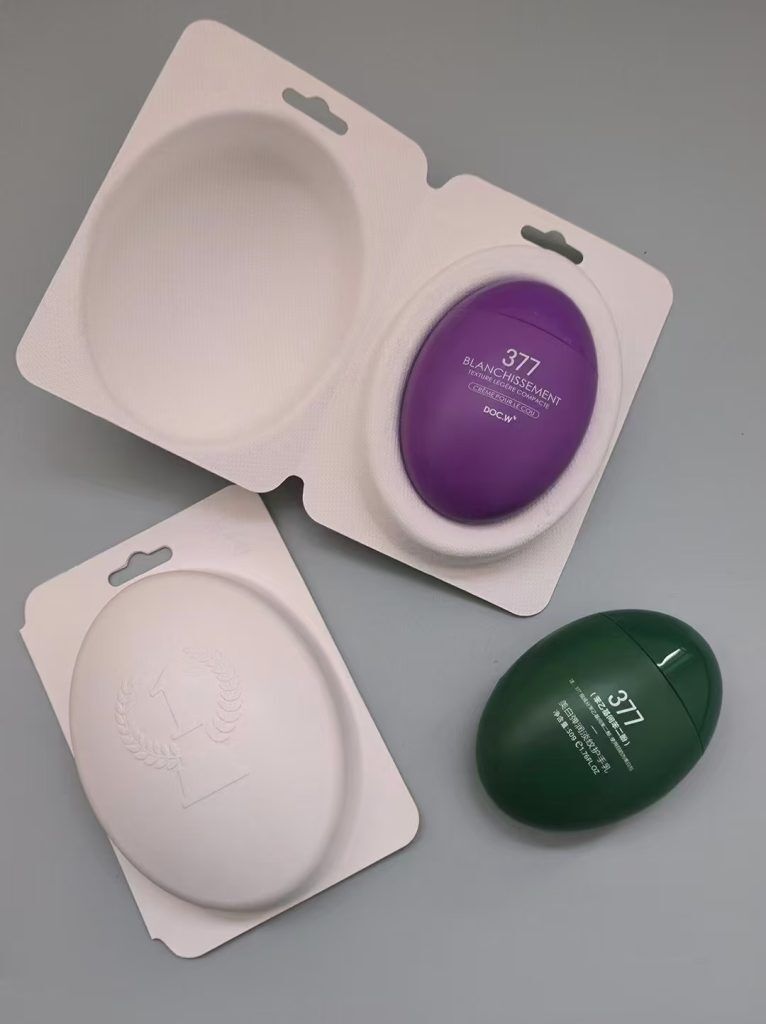
The simplest approach is to let the lid and base hold together through the molded structure itself. This can be achieved through overlapping edges, a wraparound lip, friction between matched contours, or a lid that fits neatly over the base.
This style is often a good fit for lightweight products, internal retail packaging and boxes that will later be held together by an outer carton or sleeve. It creates a clean appearance because there is no visible tab, clip or extra component. It can also help keep the pack fully fiber-based.
However, “simple” does not mean that the design can be decided casually. Molded pulp has natural variation, so the relationship between the lid and base needs to allow for realistic manufacturing tolerances. If the fit is too loose, the box may open during handling. If it is too tight, users may struggle to open it or damage the edge after several uses.
For this reason, a self-closing structure is usually best when the product is not particularly heavy and the box does not need to survive repeated opening and closing. It can be elegant and economical, but it should not be expected to provide the same security as a positive lock.
2. Molded Snap Lock or Clip

This closure uses a small molded protrusion, button or clip-like feature that aligns with a corresponding recess on the other half of the box. It is formed directly in the pulp structure, so no separate fastening part is required.
In many molded pulp boxes, this feature provides only light assistance in keeping the lid in its intended position. It should not be treated as a high-strength lock or the primary safeguard against a box opening during shipping. The overall lid-and-base structure still does most of the work, while an outer carton, sleeve or sealing label may be needed where additional transport security is required.
Its value is often as much visual as functional. A small molded clip can make the closure look more deliberate and finished, while giving the user an obvious place to press, lift or open. This can work particularly well for eyewear cases, cosmetics, small accessories and gift packaging, where the pack is handled individually and the opening experience matters.
The detail still needs to be designed with care. It should be substantial enough to retain its shape after molding, but not so pronounced that it makes demolding difficult or creates a fragile thin area. The position, thickness and draft angle should be considered during mold development, together with the way the lid and base naturally fit together.
For boxes expected to be opened and closed repeatedly, samples should be checked over several cycles. The aim is not a forceful click, but a neat, repeatable detail that supports the overall closure and adds character to the packaging.
3. Integrated Molded Tuck Tab and Slot

An integrated tuck tab uses a molded pulp tab that inserts into a matching molded slot. Like a snap lock, both elements are made directly in the pulp mold; no separate paperboard insert or extra fastening component is required.
This closure is familiar to many users because the opening action is visually clear: lift the tab out of the slot, then open the lid. It is particularly suitable for lightweight retail boxes, cosmetic gift packaging, accessories and products where the closure should be noticeable but uncomplicated.
Compared with a friction-fit design, a tuck tab can make the closed position more obvious. It may also give designers more freedom to use a box shape that does not rely entirely on tight lid-to-base tolerances. The tab itself can become a small visual feature, especially when the box is paired with a sleeve or subtle embossing.
At the same time, molded pulp tabs need careful proportioning. A tab that is too thin may crack or soften after use; one that is too thick may not flex easily enough to insert. The receiving slot also needs sufficient clearance for normal material variation while still holding the tab in place. Long, narrow tabs are generally less forgiving than compact, well-supported forms.
This option is usually better for light-to-medium product weights. If a heavy item can pull the lid open during transport, the tuck tab may need to be supported by an outer carton, paper sleeve or another retention method.
4. External Retention: Paper Sleeves, Bands and Stickers
Sometimes the most practical choice is to keep the molded pulp box structure simple and use an external element to secure it. This approach can be especially useful when a fully integrated lock would make the mold more complicated, reduce the clean appearance of the box or add unnecessary cost.
Paper Sleeves and Paper Bands

A paper sleeve or band wraps around the closed box to hold the lid and base together. It can also provide a large, smooth area for branding, product information, instructions, barcodes or seasonal artwork. This is useful when direct printing on molded pulp would not achieve the required visual result, or when a brand wants to update graphics without changing the molded tool.
For many projects, a paper sleeve is the most natural external-retention solution because it is easy for consumers to understand and can remain compatible with a paper-focused packaging concept. It also works well for gift sets and retail products where the molded pulp box is intended to look understated while the sleeve carries the visual identity.
The sleeve must still be sized carefully. It needs enough grip to stay in place during handling without making the box frustrating to open. If products are packed by machine, the additional sleeving step should be included in the packing plan from the beginning.
Elastic Bands or Cords
An elastic band or cord can give a box a more handcrafted, reusable or gift-oriented character. It is often more tactile than a sleeve and may suit premium sets, small accessories or refill products that consumers are likely to keep.
This option is not automatically low-cost, however. It introduces a separate material and usually an extra manual assembly step. The box may also need molded grooves or locating features so the band does not slide during transport. For high-volume automated packing, those details deserve early discussion.
Silicone Bands
Silicone bands provide stronger grip and can make sense for packaging intended to be reused for storage. Their durability and soft feel can support a premium user experience, especially when the band is designed as a purposeful reusable feature rather than a temporary fastening.
The trade-off is material complexity. A silicone band turns the pack into a multi-material solution, so brands should consider how consumers will separate it at end of life. It is generally more appropriate when the reusable function is genuinely valuable, not merely as an alternative to a well-designed fiber closure.
Stickers or Sealing Labels

Stickers are another common way to keep a molded pulp box closed. A small label can bridge the lid and base, preventing accidental opening and providing a clear first-open moment for the customer. It can also carry a logo, a short message, batch information or a tamper-evident function.
For a one-time opening experience, stickers are often one of the simplest and most economical solutions. They are especially useful when the box itself only needs a light closure and the main objective is to keep it closed until the customer receives it.
The important question is what happens after the label is removed. A sticker does not create a reusable closure, so the box may need a secondary friction fit or simple structural alignment if customers are expected to close it again. Adhesive choice also matters: labels should stay secure through transport but peel reasonably cleanly from the fiber surface where possible. If recycling claims are central to the project, the label material and adhesive should be reviewed as part of the full pack design.
5. Magnetic Closure
Magnetic closures are generally reserved for presentation-focused packaging: premium cosmetics, jewellery, high-value gifts and boxes designed to stay with the customer beyond the initial purchase. Small magnets are placed inside the lid and base so that the box closes neatly without a visible tab or external band.
The appeal is easy to understand. A magnetic close can feel smooth, precise and premium, and it can keep the exterior of the box visually clean. It also supports repeated opening better than a sticker and, in many cases, feels more refined than an exposed snap lock.
But this option should be selected for a clear reason, not simply because it looks luxurious. Magnets need to be fitted securely, which adds components, labour and cost. The pulp structure must have enough room to hold and protect them without creating weak areas. The pack also becomes multi-material, so it is not the most straightforward option for brands pursuing a simple fiber-only construction.
For lower-volume gift packaging or products with a higher retail value, the investment may be justified. For cost-sensitive, high-volume or disposable packaging, an integrated closure or paper sleeve is often a more practical choice.
Choosing the Right Closure Before Tooling Starts
The closure should be discussed at the same time as the box dimensions, product fit and outer-carton plan. Leaving it until after the main mold design is complete can lead to avoidable modifications, additional tooling work or a closure that looks good but does not perform reliably.
Before confirming a direction, it helps to answer a few practical questions:
- How heavy is the product, and how securely does the box need to stay closed?
- Will the customer open the box once, or keep and reuse it?
- Is the molded pulp box sold directly at retail, placed inside an outer carton, or used only as an internal pack?
- Does the brand need a premium unboxing moment, tamper evidence or prominent printed information?
- Is additional manual assembly acceptable?
- Does the project need to remain fully fiber-based, or can it include a label, elastic band, silicone band or magnets?
- Does the box need to fit an existing outer carton?
In some cases, the most efficient solution is a simple molded structure designed around the customer’s current outer carton, provided this does not unnecessarily increase product cost. Sharing those carton dimensions early gives the packaging designer more room to create a secure and efficient overall system.
Final Thoughts
A molded pulp box closure is a small feature with a large influence on performance and perception. Friction-fit structures, snap locks and integrated tuck tabs can provide clean, fiber-based solutions when the product and transport conditions allow. Paper sleeves, bands and stickers offer flexibility when branding, tamper evidence or simpler tooling is the priority. Magnetic closures can elevate premium presentation when their added materials and assembly are justified.
The goal is not to add the most complicated closing method. It is to choose one that protects the product, suits the intended user experience and remains realistic for the project’s budget and production plan.