
When reviewing a quotation for custom molded pulp packaging, you may find a separate charge for a punching die alongside the forming and hot-press molds.
It is a reasonable question: if the molds already create the product shape, why is another tool necessary?
The answer usually comes down to how the finished edges and openings need to perform. Forming creates the main structure, but some designs require additional cutting to achieve the intended outline, hole size, or fit. A standard trimming tool is sufficient for many products. Others need a dedicated punching die because of their geometry, positioning requirements, or edge finish.
Here are five situations we consider when evaluating whether that additional tooling is needed.
What Is a Punching Die in Molded Pulp Production?
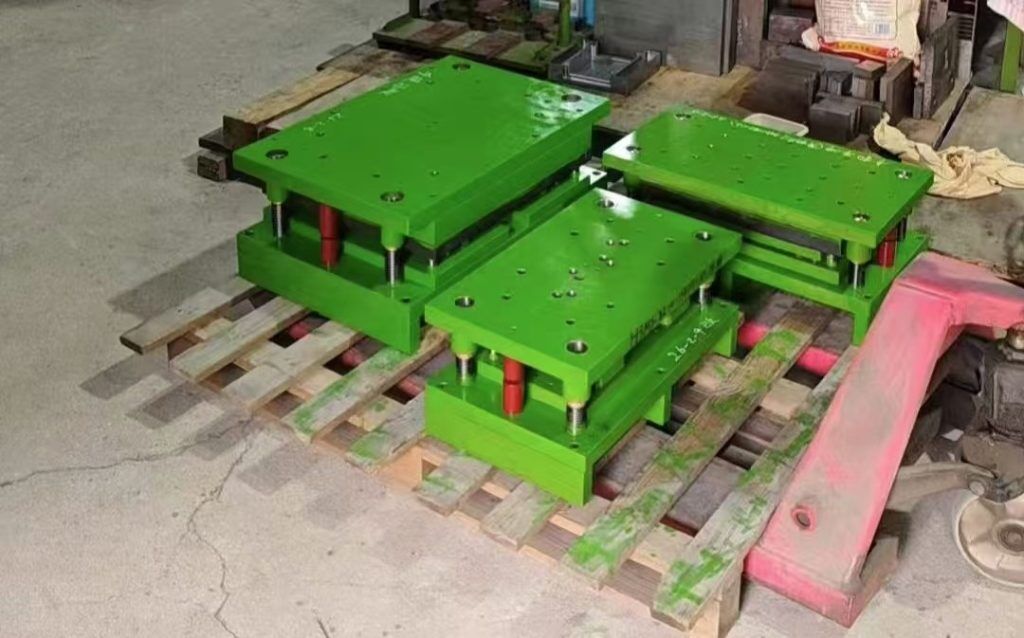
A punching die is used after forming to remove material from specific areas of a molded pulp product. Depending on the design, it may trim an outer edge, create a hole, or cut a local opening.
It serves a different purpose from a forming mold, which creates the product’s main shape, and a hot-press mold, which is used where the production process requires heat and pressure.
Tooling terminology can vary between suppliers. “Trimming die,” “cutting die,” and “punching die” are sometimes used broadly. In this article, standard trimming refers to a conventional blade-based trimming tool, often using a wooden die board. A dedicated punching die refers to a purpose-built steel tool designed for the particular cutting and positioning requirements.
The distinction is about the complete tooling arrangement, rather than simply whether the cutting blade is steel. Product support and location also matter.
1. The Cutting Edges Are Not on the Same Plane

A flat flange with a cutting line at one height is generally more straightforward to trim. The challenge changes when the areas to be cut sit at different heights.
For example, a design may have a stepped edge or separate cutting locations at different levels. A conventional flat trimming arrangement may not be able to reach and cut all these areas as intended.
In this situation, the tooling needs to accommodate the actual cutting geometry. The product must also be supported so that it stays in position during the operation.
A dedicated punching die may therefore be necessary, but a height difference alone does not settle the decision. We also need to examine the cutting direction, access to each area, and whether the work can be completed in one operation or requires separate steps.
For buyers, the useful starting point is to mark the required cut lines clearly on the drawing. A 3D model shows the product shape, but it may not explain exactly which edges must be removed after forming.
2. The Product Has Strict Concentricity Requirements

For a round product, getting the opening diameter right may only be part of the requirement. The opening may also need to share the same center as the surrounding molded structure.
This relationship is called concentricity.
Imagine a circular opening within a round molded part. The opening can have the correct diameter and still be positioned off-center. That may leave an uneven border or affect how the part fits with another component.
Where this relationship matters, the cutting tool needs a reliable way to locate the molded product against the relevant reference features. A dedicated punching die can be considered when standard trimming cannot maintain the required alignment consistently.
However, the drawing needs to identify which features must be concentric and what deviation is acceptable. A note saying “high concentricity” leaves too much room for interpretation.
It is also necessary to assess the molded part itself. Accurate cutting depends on a sufficiently consistent reference for positioning; the cutting tool cannot independently correct every variation in the formed shape.
3. Trimming Position and Dimensional Tolerances Are Tight
Some products need a reasonably neat outer edge. Others need that edge to remain within a defined distance from an inner cavity, shoulder, or other molded feature.
These are different requirements.
A part can meet its overall length and width specifications while the trimmed outline is shifted relative to the cavity. One side may then have a wider border than the other.
This becomes relevant when the trimmed edge contributes to lid fit, assembly, or clearance within another part. The supplier needs to control both the finished size and the location of the cut relative to the molded structure.
Where standard trimming cannot meet those requirements consistently, a dedicated punching die may be appropriate.
The most useful drawing identifies the critical dimensions and their reference points. For example, if the distance between a cavity and the trimmed edge matters, specify that relationship directly rather than relying only on overall dimensions.
Avoid applying tight tolerances to every dimension by default. Focus on the features that affect use or appearance. This helps the supplier choose suitable tooling without adding expense for precision the product does not actually need.
4. Small Holes Cannot Be Formed Reliably

A small hole shown in a design is not always easy to reproduce during pulp forming.
For some designs, fibers can cover the intended opening, leaving it partly or fully closed. If the hole must remain consistently open, creating it after forming may be the more suitable approach.
The next question is how to cut it.
A conventional trimming tool may not deliver the required hole quality, particularly where the opening is small and the customer also needs a controlled diameter, accurate position, or a clean perimeter. A dedicated hole-punching die may then be needed.
This deserves its own category because the issue starts with whether the opening can be produced reliably at all. Edge quality is an additional requirement.
There is no single hole diameter below which every molded pulp product automatically needs punching. The decision depends on the hole geometry, material, wall thickness, location, and required result.
Explain what the hole is for when sending the design. A general ventilation opening and a hole intended to receive a component may need different acceptance criteria, even if their dimensions look similar.
5. The Edges Need a Cleaner Finish
Molded pulp is a fibrous material, and customers have different expectations for its cut edges.
A small amount of visible fiber may be acceptable on a concealed protective insert. An exposed edge on a presentation box may require a cleaner appearance. Hole edges can also need attention if loose fibers interfere with the intended use.
When standard trimming leaves an unacceptable amount of fraying, a dedicated punching die may help achieve a more controlled finish.
Still, specifying a steel punching die is not the same as guaranteeing a completely fiber-free edge. The result also depends on the material, condition of the molded part, cutting-edge condition, and tooling maintenance.
For this reason, “no burrs” or “no rough edges” should be discussed in practical terms. Is the concern visible fraying, loose fibers, uneven cutting, or a functional obstruction?
Reference photographs and approved physical samples are often more useful than a broad description. They give both buyer and supplier a clear basis for judging the finished edge.
Does Every Molded Pulp Product Need a Punching Die?
No. If standard trimming meets the product’s structural, dimensional, and visual requirements, there is no reason to add a dedicated punching die.
The decision should follow the design and its intended use. Neither dry pressing nor wet pressing, by itself, determines whether additional punching tooling is necessary.
Cost should also be considered at the project level. A dedicated die adds upfront investment, so buyers should understand which requirement makes it necessary. Expected order volume helps put that investment into context, but a high volume alone does not prove that the tool is needed.
Sometimes a design adjustment is worth discussing. If a cutting feature can be simplified without affecting function or appearance, it may allow a simpler trimming approach. Any change should be agreed with the customer before tooling proceeds.
What Should You Provide for a Tooling Evaluation?
A useful evaluation starts with drawings or a 3D file, supported by a few clear requirements:
- Mark the edges and openings that need cutting.
- Specify critical dimensions, tolerances, and positioning references.
- Explain the purpose of small holes and any mating components.
- Provide edge-quality references or samples where appearance matters.
- Share the expected order quantity and annual volume.
You do not need to design the punching tool yourself. The goal is to explain what the finished product must achieve so the supplier can assess the appropriate process.
Choosing the Right Cutting Tooling
A dedicated punching die is worth evaluating when a molded pulp design has cutting edges at different heights, strict concentricity or trimming tolerances, small holes that cannot form reliably, or demanding edge-quality requirements.
These are reasons to review the process, rather than automatic rules. The final choice should connect the tooling investment to a specific requirement and be confirmed through suitable samples.
At InNature Pack, we assess cutting requirements alongside the molded product design so that additional tooling has a clear purpose.
Have a design with small holes, complex cut lines, or critical fitting dimensions? Send your drawings and key requirements to InNature Pack. We can evaluate whether standard trimming is sufficient or a dedicated punching die is needed.