
Introduction: Why Takeout Bowl Material Choice Is No Longer Simple
Takeout and delivery have become a permanent part of modern foodservice. What was once a secondary packaging decision has turned into a strategic one—especially when it comes to bowls. Bowls must handle hot, oily, and liquid foods, survive transport, meet food safety regulations, and increasingly, align with sustainability goals.
Today, three materials dominate the discussion: bagasse, kraft paper, and PLA. Each is often described as “eco-friendly,” yet in practice, their performance, regulatory acceptance, and real-world environmental impact can be very different.
This article does not aim to declare a single “winner.” Instead, it provides a practical, buyer-focused comparison to help food brands, operators, and packaging teams choose the takeout bowl material that best fits their application, market, and long-term strategy.
How Sustainability Is Evaluated in Takeout Packaging
When foodservice buyers assess sustainability, they are rarely looking at one single metric. In practice, bowl materials are evaluated across a combination of factors: material sourcing, real-world performance, food safety, end-of-life outcomes, and carbon impact.
Understanding these criteria first makes it easier to interpret how different materials perform in real use—not just on paper, but across the full life cycle of a takeout bowl.
Comparing Bagasse, Kraft, and PLA
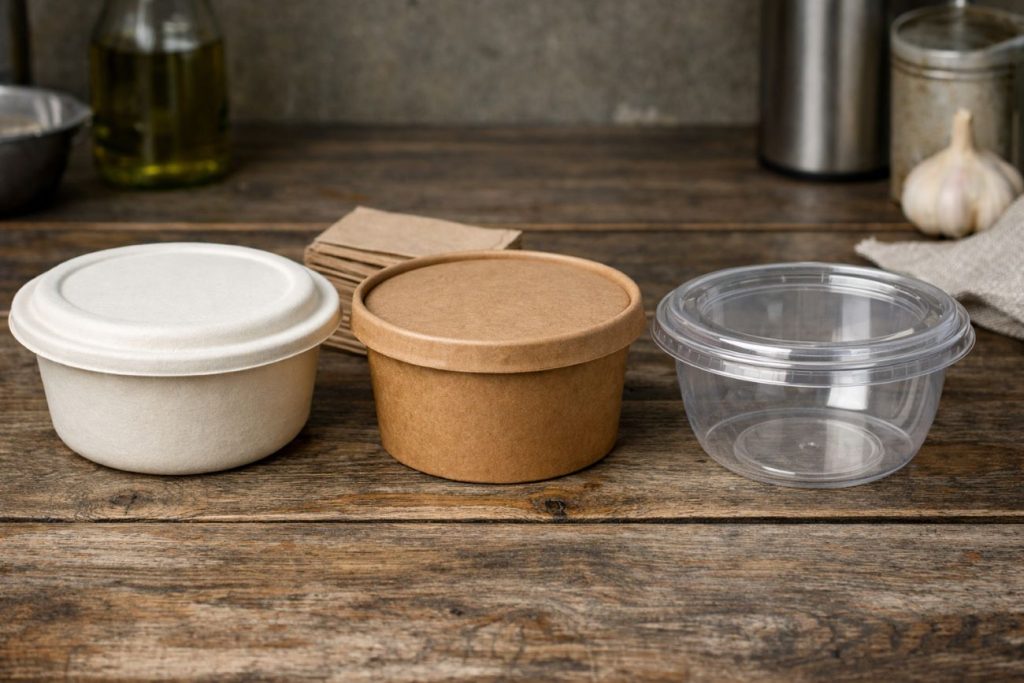
Bagasse, kraft and PLA all reduce plastic consumption in different ways with different impacts on waste, composting and recycling.
1. Material Source
Bagasse is derived from sugarcane fibre remaining after juice extraction, so it uses agricultural waste that would otherwise be burnt or sent to landfill. It is typically around 100% renewable content, and frequently up to 40 to 60% of that can be sourced from waste streams.
Kraft paper starts with wood pulp produced by the kraft process. It typically contains 30 to 80 per cent recycled fibre, and many foodservice grades now blend certified virgin with post-consumer recycled content for performance.
PLA is a bioplastic derived from plant starches, usually corn, and occasionally sugar beet or cassava. The resin is usually almost entirely renewable carbon, although bowls may contain pigments or additives. For buyers counting their sourcing, bagasse and PLA occupy the high-renewable end, while kraft sits between renewable and recycled inputs.
2. Performance
Bagasse bowls stand up to heat and shape with hot, saucy grub. With the correct forming, they can handle oils and light liquids. The structure remains stable in stacking and delivery runs.
Kraft paper is good for dry or slightly greasy foods and will do for hot dishes if coupled with a light, water-based coating. Extended contact with moist or oily foods will soften it.
PLA is ideal for cold foods, salads and desserts. It begins to soften at about 45 to 50 degrees Celsius, so it is not ideal for hot soups or curries.
| Application | Bagasse | Kraft paper | PLA |
|---|---|---|---|
| Very hot meals | High | Medium | Low |
| Oily / saucy dishes | High | Medium | Low |
| Cold salads / desserts | Medium | High | High |
| Long delivery times | High | Medium | Medium |
3. Food Safety
Reputable suppliers of bagasse, kraft, and PLA bowls generally manufacture to Australian food-contact regulations, as well as EU or US standards. The primary risk lies not in the base fibre but in inks, adhesives or coatings, which can migrate into food, particularly with hot, fatty meals.
Grease‑resistant barriers might be used for kraft and bagasse bowls. Opting for fluorine-free, water-based alternatives reduces worry over chemical migration. PLA itself is food‑grade, although colourants and lids require evaluation.
For takeout bowls used with hot or oily foods, documented compliance with FDA and EU food-contact regulations, as well as SVHC screening under REACH, is more relevant than general food safety management certifications.
4. End-of-Life
Bagasse bowls are compostable and break down in 30 to 60 days in commercial compost. Most grades decompose in well-managed home compost too. They become soil-like rather than long-term plastic waste.
Kraft paper bowls slot into paper recycling when unlined or lined with water-based coatings, which are accepted by most municipal systems. Plastic or thick grease barriers reduce recyclability or may even consign items to general waste.
PLA requires industrial composting, with specific heat and moisture, and won’t decompose in home compost or normal recycling. If any of these go to landfill, they behave like other organic or plastic waste. Bagasse and kraft slowly degrade with limited gas capture, while PLA can add to plastic load if systems cannot sort it. Transparent labelling and straightforward bin signs assist team members and customers in placing each bowl in the appropriate stream.
5. Carbon Footprint
Bagasse and PLA typically show a lower cradle-to-gate carbon footprint than fossil-based plastics because they originate from renewable feedstocks that absorb CO₂ during growth. Kraft paper can also achieve lower emissions when mills rely on biomass energy and incorporate high recycled content.
Energy and water use vary significantly by producer. Bagasse often performs well where fibre is processed near sugar mills, allowing waste material to be reused locally. PLA manufacturers continue to improve efficiency, but the material remains energy-intensive to polymerise.
For most foodservice operators, high-renewable or high-recycled-content bowls with verified emissions data align best with carbon-reduction and waste targets.
Real-World Bowl Performance
Food operators typically test bowls in real shifts, with long delivery runs, tight stacking on shelves and mixed menus. Feedback suggests real performance varies with heat, humidity and how staff manage lids and stacking.
For Soups
Most cafés prefer bagasse bowls for hot soups because they remain fairly solid up to around 220°F, even in tightly packed delivery bags. With a snug-fit lid, leak resistance is good and the fibrous wall provides decent heat retention, so soup stays warm for 30 to 40 minutes without bowls bending or warping too badly.
Kraft paper bowls are fine if they have a correct lining. Unlined kraft typically breaks down on long journeys or very greasy broths, and staff frequently report seam-weeping. Condensation can drench the outside wall, leaving exteriors sometimes feeling soft on arrival, especially in humid weather.
PLA bowls are rarer for hot soup. Numerous kitchens report softening or light warping with very hot fills, and lids pop if steam has no escape. Thermal hold is decent, but not quite as stable as bagasse, and PLA requires industrial composting to the right standard, which isn’t always available.
For hot soup, the vast majority of operators default to bagasse as the most dependable leak resistant compostable option.
For Salads
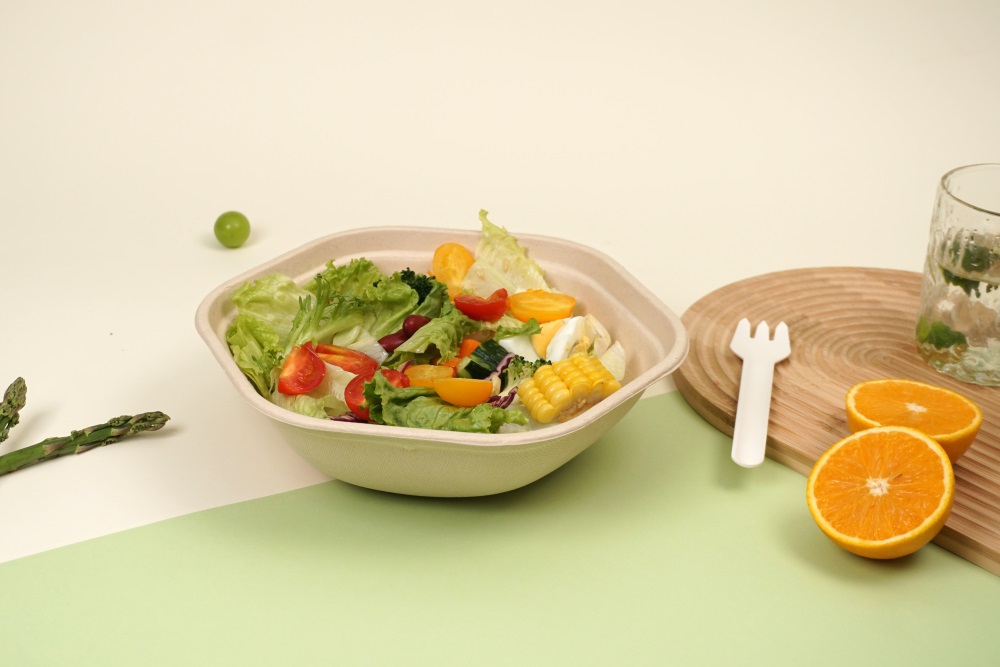
For cold salads, bagasse bowls coped with moisture and remained dry even with juicy toppings.
Kraft bowls are well-breathable, so greens remain crisp. They still require linings for dressings and greasy add-ons. Uncoated kraft, meanwhile, used for drier salads.
PLA salad bowls top display is clear, which helps team and clients see colours and layers at a glance. Food courts and salad bars like this.
For mixed salads with dressings, companies tend to use lined kraft or bagasse, keeping PLA mostly for display-heavy cold grab and go lines.
For Hot Meals
For hot mains (curries, stir-fries, rice dishes), bagasse bowls generally retain form best, even with steam and sauces. They remain stable in stack, withstand direct food contact at high temperatures, and most brands permit brief microwave use without evident softening or leaching.
Kraft bowls are good for warm meals and depend a lot on lining quality. Bad linings result in seepage or soggy walls on long hauls, and very hot, oily foods push them as far as they can go. Where kraft is uncoated, it’s easier to recycle but can’t hold saucy or greasy meals for long journeys.
PLA is okay with warm, not boiling, foods. Kitchens are reporting increased risks of warping in hot display units or with microwave reheating. Most PLA are not microwave-safe and that rules them out for reheatable takeaway.
In hot meals, those requiring compostable options tend to favour bagasse, which is accepted in commercial compost, retains heat and remains robust. Paper-based bowls like bagasse or uncoated kraft break down quicker than many bioplastics when composted in the correct system.
The True Cost of Takeout Bowls: Beyond Unit Price
Invoiced unit price is only one component of packaging cost. For foodservice operators, the real cost of a takeout bowl often appears elsewhere—across logistics, waste handling, compliance, and brand risk.
When comparing bagasse, kraft paper, and PLA bowls, buyers increasingly look at total cost of ownership, which may include:
- Unit price by size and lid configuration
- Order volumes, price breaks, and contract stability
- Printing and customisation requirements
- Storage efficiency and carton weight
- Freight distance, transport mode, and lead time
- Waste handling costs, including contamination risk
- Exposure to plastic bans, EPR fees, and future regulation
- Supply disruption and price volatility
- Brand and reputational impact linked to packaging choices
While sustainable options are often higher in unit price than conventional plastics, they can reduce long-term costs by lowering waste-related fees, minimising regulatory risk, and supporting brand trust as packaging rules tighten globally.
Supply Chain Considerations
Bagasse supply is linked to sugarcane harvest cycles, kraft paper follows global pulp markets, and PLA pricing fluctuates with agricultural feedstocks such as corn and sugar. Long-distance imports can introduce lead-time and freight uncertainty, while local or regional sourcing—though sometimes higher in unit cost—may reduce delays, emissions, and last-minute airfreight expenses.
For multi-site operators, forecast sharing, safety stock on core SKUs, and long-term supplier relationships often prove more effective than chasing the lowest spot price.
Brand, Compliance, and Risk Cost
Packaging is one of the most visible sustainability signals a food brand sends to customers. Clear, credible material choices—supported by compliant labelling and realistic end-of-life pathways—can strengthen trust and reduce reputational risk.
As regulations such as plastic bans and extended producer responsibility schemes expand, packaging decisions made today increasingly affect future cost exposure. In this context, material clarity and regulatory readiness become part of the overall cost equation.
Practicality at Scale: Why Function Still Wins
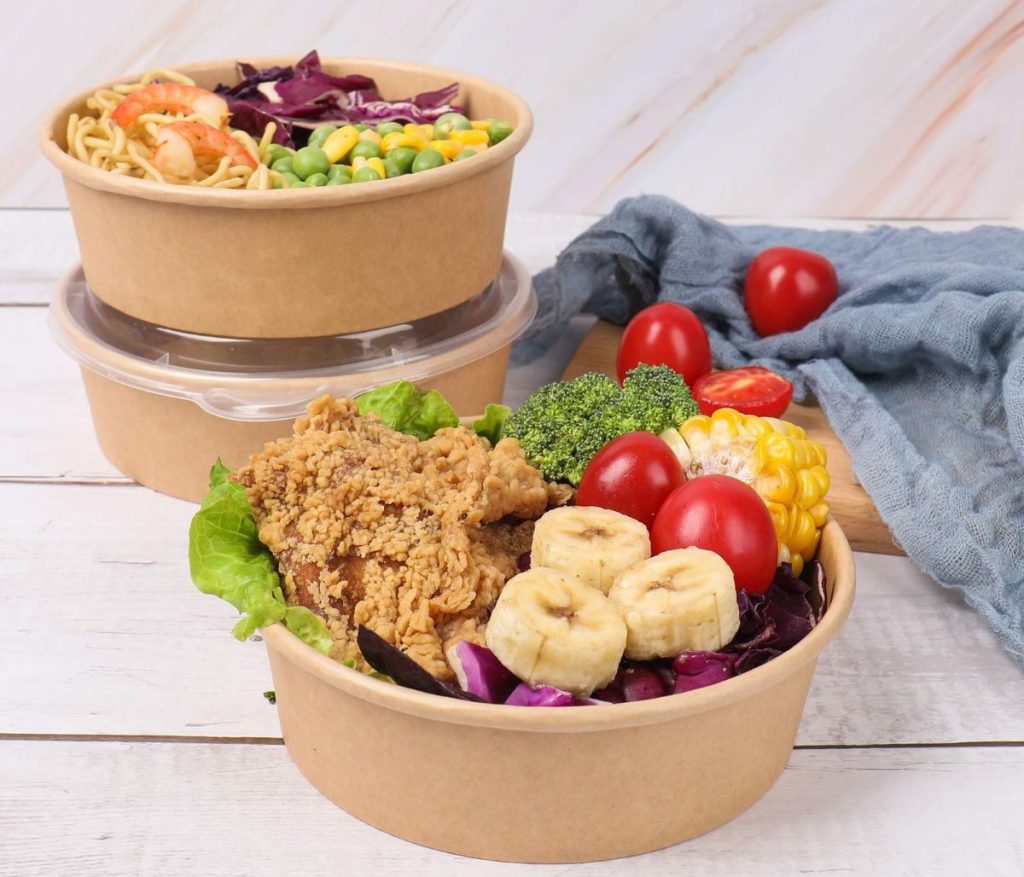
At the scale of modern food delivery, function is amplified by volume. With the global food delivery market valued at approximately USD 289 billion in 2024 and projected to exceed USD 500 billion by 2030, stackability, durability, and handling efficiency are no longer secondary considerations—they are daily operational realities.
This scale explains why leaks, deformation, and lid issues attract disproportionate attention. When a bowl is used once, any weakness may go unnoticed. When it is used millions of times per day across kitchens, couriers, and doorsteps, small flaws translate directly into waste, complaints, and repeat-order risk.
From a performance perspective, bagasse bowls generally score well for heat resistance and rigidity, making them suitable for hot and oily foods over longer delivery times. Where fibre lids are used, fit and closure design become important to ensure speed during peak service. Plastic lids may still be chosen in some cases for visibility or sealing, but fibre lids are increasingly adopted where a fully fibre-based solution is preferred.
Kraft paper bowls are lightweight and nest efficiently, which helps with storage and prep-line handling. However, prolonged exposure to heat, moisture, or sauces can cause softening or warping—pain points that consumers continue to highlight despite positive perceptions of the material’s sustainability story.
PLA bowls are visually clean and nest neatly, which suits compact delivery bags. Their limitations appear under heat: softening, fogging, and reduced rigidity can frustrate users, particularly for hot meals.
Stacking and storage conditions further magnify these differences. Rigid bagasse bowls stack securely in prep areas and delivery bags, although thicker rims may reduce shelf density. Kraft bowls save space but require dry conditions, as high humidity and excessive stack height can deform lower units. PLA bowls resist side pressure well, yet may become brittle at low temperatures and slippery in high stacks during transport.
Storage practices also matter. Compostable materials such as bagasse and kraft should be kept cool, dry, and off the floor to avoid moisture uptake. PLA is sensitive to heat and light, both of which can accelerate degradation. Proper rotation, sealed outer cartons, and clear size coding help reduce damage, waste, and operational friction.
Across markets, feedback follows a consistent pattern: sustainability claims attract attention, but reliability drives repeat orders. Bowls that remain firm, resist leaks, and are easy to handle and open perform better—not only in customer perception, but in waste reduction and overall system efficiency.
Which Bowl Material Fits Your Business Best?
- High-Volume Takeout and Delivery Brands
- Consistency, heat resistance, and regulatory clarity are critical. Bagasse bowls often offer the most balanced solution for large-scale foodservice operations.
- Brands Focused on Visual Presentation
- Kraft bowls provide strong branding opportunities, but material structure and end-of-life implications must be carefully evaluated.
- Short-Term or Cold Food Applications
- PLA may be viable where industrial composting infrastructure exists and heat exposure is minimal, but its limitations should be clearly understood.
Final Thoughts: Sustainability Is About Fit, Not Labels
Each takeout bowl material has a clear role in foodservice. Bagasse bowls are well suited to hot, oily, or saucy foods where structure, heat resistance, and credible sustainability are priorities. Kraft paper bowls offer a tidy, familiar look and perform well for dry or light meals when moisture exposure is limited. PLA bowls provide a clean, transparent aesthetic for cold foods such as salads and desserts, where heat is not a concern and appropriate composting infrastructure exists.
No single bowl material wins in every scenario. True value comes from aligning food type, delivery conditions, brand positioning, and local waste systems—not from labels alone.
For most real-world takeout applications, particularly those involving hot or liquid foods, fibre-based solutions such as bagasse often strike a strong balance between functional performance and environmental credibility without relying on conventional plastics.
As a next step, brands and operators should clarify their priorities: heat tolerance, leak risk, operational efficiency, price stability, and disposal pathways. Testing a limited batch in live service, gathering feedback from kitchen staff and customers, and reviewing outcomes against local waste rules can help determine which bowl fits best—not only with the menu, but with the business as a whole.
FAQ
Are bagasse bowls plastic-free?
Most molded bagasse bowls are plastic-free and rely on fibre structure rather than liners.
Can kraft paper bowls always be recycled?
Only if unlined or coated with recycling-compatible barriers. Many foodservice kraft bowls are not recyclable in practice.
Is PLA compostable everywhere?
No. PLA requires industrial composting facilities, which are not available in all regions.