
If you have spent any time in a fulfillment center, a manufacturing warehouse, or even just unboxing an online order at home, you already know the scene too well.
A product arrives in a sturdy outer cardboard box. But the moment you slice the tape, you are confronted with a chaotic mountain of packaging waste. There are bulky Expanded Polystyrene (EPS) foam blocks, layers of clear plastic vacuum-formed trays, sheets of plastic film liners to prevent scratching, and a sea of plastic air pillows or loose-fill “peanuts” jammed into every remaining square inch of empty space.
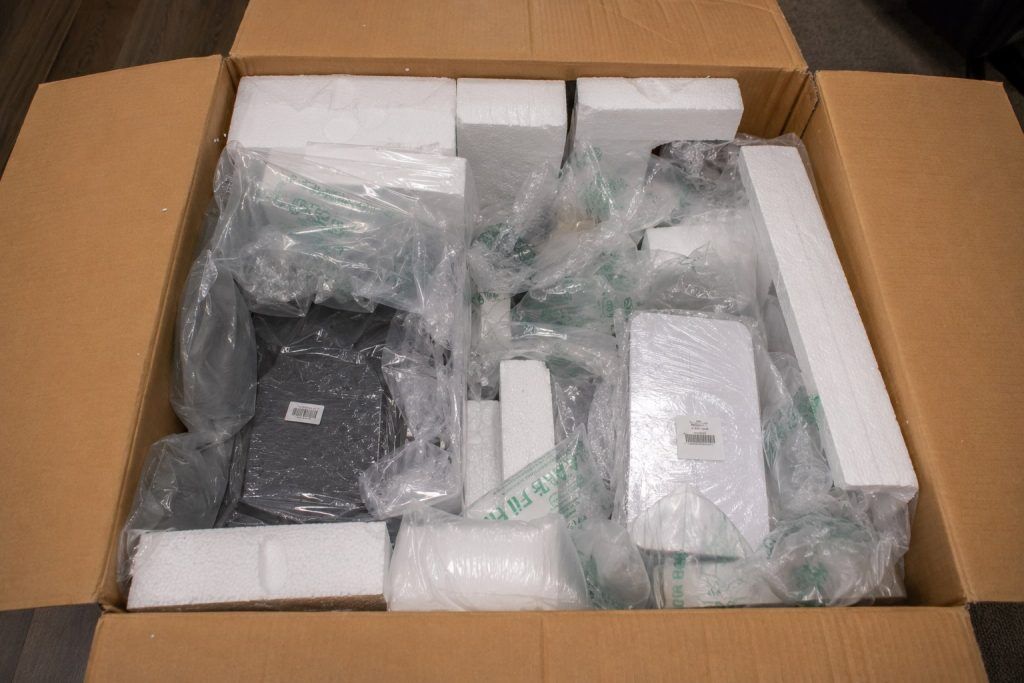
For decades, this multi-material approach was considered the gold standard for protective packaging. The logic seemed simple: the more layers of plastic and foam you threw at a product, the safer it would be during transit.
But today, that logic is crumbling. Brands worldwide are facing unprecedented pressure from both corners—strict global anti-plastic regulations (such as rising plastic taxes and extended producer responsibility laws) and increasingly eco-conscious consumers who despise dealing with a trash can full of non-recyclable foam.
Furthermore, from a pure operations perspective, relying on four different packaging materials from three different vendors is a logistical headache.
What if you could replace that entire multi-layered mess with a single, elegant, and 100% sustainable material?
Enter custom molded pulp packaging. Far from the rough, grey egg cartons of the past, modern molded pulp is a marvel of precision engineering. It doesn’t just replace plastic; it eliminates the need for foam, liners, and extra gap fillers entirely.
Let’s dive deep into the science, the economics, and the practical roadmap of how switching to molded pulp can streamline your supply chain and elevate your brand image.
Precision Contoured Fit: Why Molded Pulp Eliminates Plastic Liners
To understand how molded pulp reduces the need for secondary plastic liners and extra thermoformed trays, we have to look at how products are secured inside a box.
When brands use generic packaging like standard square foam blocks or crumpled paper, the packaging fails to match the product’s unique contours. The resulting gaps allow the item to shift, slide, or rotate during transit. To stop this movement—and to protect the product’s finish from abrasion—companies are forced to wrap the item in smooth plastic poly bags or add custom vacuum-formed plastic trays.
Now, it is true that traditional foams (like EPS or molded EPE) can be molded into complex, product-matching shapes. They do a great job of holding a product in place. However, foam inserts come with a massive logistical penalty: they cannot nest. When shipping or storing just the packaging components, molded foam blocks take up an immense amount of warehouse volume because you are essentially transporting and storing structured air.
Molded pulp solves both the protective and spatial challenges through intelligent 3D captive design.

Because molded pulp is created using custom-engineered industrial tooling, it mirrors the exact geometry of your product—accounting for every curve, corner, and delicate interface. When you place your product into a custom molded pulp nest, it achieves a secure “glove fit” that restricts unwanted movement, but does so within a highly nestable, space-saving profile.
Minimizing the Need for Plastic Liners
Because the engineered fit is so precise, movement inside the box is strictly controlled. By minimizing the internal shifting and rubbing that typically happens with generic fillers, you can drastically reduce—and often completely eliminate—the need for a separate plastic liner to protect polished metal, glass, or delicate surfaces.
Depending on your aesthetic requirements and the sensitivity of your product’s surface, the choice of manufacturing process further refines this protection:
- Wet Press Technology (Fine Industrial Molding): For high-end consumer goods, cosmetics, and electronics, wet press pulp is the ideal choice. The pulp is dried directly on the mold under intense heat and high pressure. This precision process yields an incredibly sleek product with one perfectly smooth face and one distinct, clean mesh-textured face. By placing the ultra-smooth, non-abrasive face directly against your product, you get a premium look and feel that safely cushions delicate finishes without relying on traditional plastic wrap.
- Dry Press Technology: For heavy-duty industrial items, traditional dry press components provide rugged, structural nesting. It ensures that heavy, complex parts remain securely cushioned and stationary throughout global shipping journeys, while still stacking tightly together when empty.
Structural Cushioning: How Paper Replaces EPS and EPE Foam

The most common objection packaging engineers raise when looking to phase out plastics is: “Can a paper-based material really match the shock absorption and load-bearing capacity of Expanded Polystyrene (EPS) or Polyethylene (EPE) foam?”
It is a fair question. Foam protects products by being consistently thick and spongy; it compresses under impact across its entire surface to absorb kinetic energy.
Molded pulp, however, approaches protection through a combination of geometric structural engineering and targeted thickness scaling. It does not rely solely on solid mass to do the heavy lifting; instead, it optimizes material where it matters most.
The Anatomy of a Pulp Cushion
When a molded pulp tray is engineered, specific geometric features and thickness profiles are built directly into the part to handle the product’s specific mass:
- Deformable Ribs and Corrugations: Strategically placed ridges act as miniature, built-in shock absorbers. Under impact, these ribs are designed to flex and deflect micro-amounts, absorbing and dissipating the kinetic energy before it ever reaches the product inside.
- Perimeter Air Buffers (“Crush Zones”): Molded pulp designs inherently create an air gap between the outer wall of the shipping box and the product itself. If a courier drops the box on its corner, the outer pulp rim deforms to take the blow, acting exactly like the crumple zone of a modern car.
- Targeted Wall Thickness for Heavy Loads: While lightweight consumer items can rely on thin-walled precision, heavier products require a different approach. For heavy-duty industrial components, heavy electronics, or dense liquids, engineers utilize thick-wall dry press technology. By scaling the wall thickness up (often ranging from 3mm to over 5mm) and combining it with dense fiber compaction, the pulp insert gains the high compressive strength needed to support heavy loads without collapsing.
By balancing physics, intelligent geometry, and tailored wall thickness rather than relying on chemical foam density, a well-designed pulp insert can easily pass rigorous international transit testing standards, such as ISTA (International Safe Transit Association) drop, vibration, and compression sequences. Whether you are shipping a heavy industrial motor that needs thick-walled structural support or a delicate glass bottle of premium spirits protected by engineered air buffers, paper pulp can be customized to handle the load.
Goodbye Void Fillers: The All-in-One Efficiency and Cost Benefits
Think about the labor cost and time spent at a traditional packing station. A worker takes an outer box, tapes the bottom, places a sheet of bubble wrap, sets the product inside, stuffs the sides with plastic air pillows, adds another layer of foam on top, and finally seals the box.
This process requires multiple steps, high labor costs, and significant inventory management to track all those different packaging SKUs.
Molded pulp introduces the beauty of the All-in-One Solution.
With a custom pulp tray, the packaging is doing three jobs at once: it positions the product, cushions it against shock, and fills the empty space in the outer box. The packing process simplifies down to a beautiful, rapid rhythm: Open box, drop in pulp tray, place product, seal box. Labor efficiency skyrockets, and your packing line moves faster than ever.
The Massive Logistics Advantage: Nestability

There is another massive, hidden financial drain associated with traditional foam and plastic packaging: shipping and storing empty air.
Traditional EPS foam blocks and rigid plastic structures cannot be nested tightly together. They are bulky, rigid shapes. When a truck delivery of foam arrives at your factory, or when you store it in your warehouse, you are paying a massive premium to store massive blocks of air.
A Game-Changer for Warehouse Space
Unlike rigid foam, un-assembled molded pulp trays feature an open, tapered design that allows them to nest tightly inside one another.
Because they stack perfectly flat, a single pallet of molded pulp can hold up to 3 to 4 times more packaging units than a pallet of equivalent foam blocks. This dramatically slashes your inbound freight costs, reduces the number of delivery trucks on the road, and reclaims up to 50% or more of your precious warehouse floor space.
(Note: While specialized, fully enclosed hollow items like molded pulp bottles are inherently bulky and cannot be nested, the vast majority of structural trays, end-caps, and inserts offer this incredible space-saving nestability).
3 Steps to Transition: How to Implement Molded Pulp Successfully
Switching away from traditional foam and plastic liners is a powerful business move, but it shouldn’t be a guessing game. To guarantee that your transition to sustainable packaging is seamless, cost-effective, and highly protective, we recommend following this practical, three-step roadmap:
Step 1: Scientifically Evaluate Product Fragility and Weight
Before drawing a single line in a CAD program, you must understand the exact physical nature of what you are shipping. What is the total weight? Where are the most vulnerable points (e.g., an exposed glass screen, a delicate calibration dial, or heavy metal mounting brackets)?
Knowing these variables dictates the exact engineering path:
- For Lightweight & High-Aesthetic Items: Cosmetics, luxury wellness items, or personal electronics thrive in premium Wet Press pulp. It provides a tight, scratch-free embrace with an ultra-clean appearance.
- For Heavy-Duty Industrial Components: Heavy equipment, automotive parts, or large electronics require Dry Press or thick-walled pulp. Here, the focus is on deeper structural ribs and maximum wall thickness to handle high weight distribution and intense drop impacts.
Step 2: Insist on Prototyping and Rigorous Testing
Never leap straight from a digital 3D concept to full-scale mass production. A reliable packaging transition requires physical validation.
Once an initial design is established, prototype samples should be created. This allows your team to feel the material, test the fitment on the actual product assembly line, and most importantly, run physical transit simulations. Putting the prototype through standardized drop, vibration, and stacking tests ensures that the paper structures perform flawlessly in real-world courier environments before you invest in production tooling.
Step 3: Partner with a Supplier for Optimized Design and Cost Control
The true magic of molded pulp happens during the early collaborative design stage. Choosing an experienced manufacturing partner is the single best way to optimize your upfront investment.
A knowledgeable supplier won’t just take your product and duplicate your old plastic packaging; they will analyze your specific industry requirements, guide you to the most cost-effective manufacturing process for your budget, and optimize the structure to ensure high performance without over-engineering.
Elevating the Unboxing Experience and Brand Reputation
Beyond the engineering data and the logistical savings, there is a human element to packaging that cannot be ignored. The packaging is the very first physical touchpoint a customer has with your brand.
Imagine a modern consumer opening a premium, sustainably marketed product, only to find it choked in messy, static-cling packing peanuts and brittle white styrofoam that breaks into un-recyclable crumbs across their living room floor. It creates immediate cognitive dissonance. It feels outdated, messy, and careless.
Now, imagine the alternative. The customer opens a sleek, minimalist cardboard box. Inside, the product rests perfectly in a clean, beautifully contoured, organic paper pulp tray. The entire experience feels unified, high-end, and intentional.
Global Compliance, Made Simple
By utilizing natural raw materials like sugarcane bagasse, bamboo fiber, or clean recycled paper pulp, your packaging becomes inherently 100% biodegradable and compostable. By removing plastics and foam from your equations, your brand seamlessly bypasses international eco-taxes and green trade barriers, positioning your business as a progressive leader in the global marketplace.
Conclusion: Ready to Reshape Your Packaging?
Replacing foam, plastic liners, and messy void fillers isn’t just about replacing plastic with paper. It is a complete modernization of your supply chain. It is an opportunity to reduce your total SKU count, slash warehouse clutter, speed up your assembly lines, and deliver an unboxing experience that your customers will truly appreciate.
At InNature Pack, we believe that true sustainability thrives when it is paired with elite engineering. Our team coordinates everything from custom 3D design and technical engineering optimization to high-capacity production. Whether you are aiming to scale a massive wholesale campaign or looking to transition a complex industrial part to a green alternative, we are here to guide you through every step of the process.
Let’s design a smarter, cleaner future together. Contact the engineering and development team at InNature Pack today to request a comprehensive design evaluation and discover how easy it is to leave the plastic behind for good.