
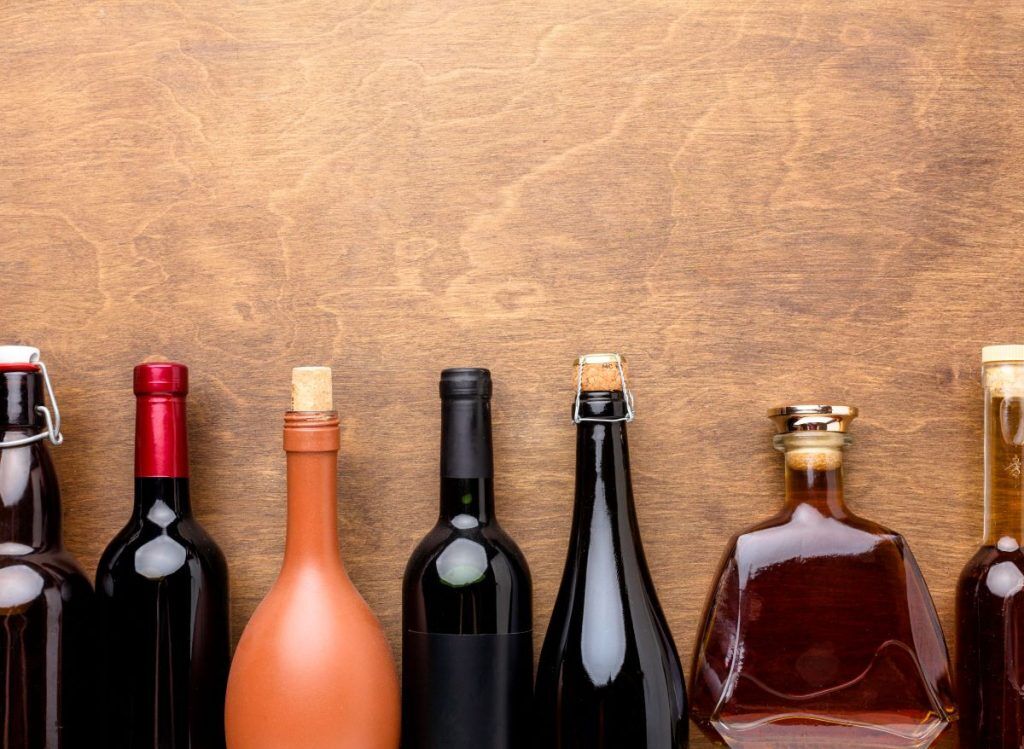
Shipping a bottle of spirits is not as simple as placing it in a box and adding cushioning around it. Glass bottles are heavy, fragile and often expensive. Many also feature unusual shapes, thick bases, narrow necks, premium labels or decorative finishes that require additional protection.
The challenge becomes even greater in e-commerce. A package may be dropped, tilted, compressed, vibrated and handled multiple times before reaching the customer. Packaging that looks secure when it leaves the warehouse may not provide enough protection throughout the entire distribution journey.
So, what is the best packaging for shipping glass spirits bottles?
There is no single solution that is ideal for every brand. The right choice depends on the bottle, shipping method, pack configuration, sustainability targets and budget. However, for brands seeking a combination of protection, custom fit, storage efficiency and premium presentation, molded pulp is often one of the strongest overall options.
Why Shipping Glass Spirits Bottles Is So Challenging
Unlike lightweight consumer goods, spirits present a unique set of physical and logistical hurdles. Understanding these challenges is the first step toward choosing the right protective packaging.
- High Unit Weight & Heavy Bases: Premium spirits often use heavy, thick-bottomed glass bottles to convey luxury. When a package is dropped, that concentrated weight generates massive kinetic energy that can easily blow through flimsy internal partitions.
- Complex Geometry: From square gin bottles and decanter-style tequila bottles to long-necked vodka shapes, irregular contours create empty spaces inside standard boxes. If a bottle can shift during transit, it can break.
- The Courier Drop Factor: Packages sent via direct-to-consumer (DTC) e-commerce channels are handled multiple times, sorted on automated conveyor belts, and subjected to unpredictable drops, vibrations, and side impacts.
- Liquid Contamination Risk: Unlike a broken shirt or book, a broken glass bottle releases liquid that dissolves outer corrugated boxes, ruins adjacent products, and creates immediate carrier liability.
To find the right system, you need to evaluate your needs across three core dimensions before purchasing packaging:
- Physical & Logistics Requirements:
- Bottle Geometry & Weight: Standard round vs. custom heavy-base or asymmetrical designs.
- Fulfillment Channel: B2B palletized freight vs. DTC parcel delivery (high drop risk).
- Pack Count: Single-bottle vs. multi-pack configurations (3-pack, 6-pack, 12-pack).
- Outer Shipper Compatibility: Matching insert geometry with the wall strength (ECT rating) and dimensions of the outer corrugated box.
- Brand & Market Compliance:
- Brand Presentation: Functional transport protection vs. a clean, dust-free luxury unboxing experience.
- Sustainability Objectives: Regional plastic bans (e.g., EU PPWR), recycling accessibility, and corporate ESG targets.
- Commercial Feasibility:
- Total Unit Economics: Balancing initial tooling costs against breakage rates, warehouse space, dimensional freight fees, and line assembly efficiency.
Comparison of Common Protective Packaging Options
Spirits brands can choose from several cushioning materials. Each option has advantages and limitations, and protection should always be evaluated as part of the complete packaging system.
| Packaging Type | Protection | Sustainability & Storage | Best Use / Limitations |
|---|---|---|---|
| EPS/EPE Foam | High cushioning | Difficult to recycle; bulky and non-nestable | Good custom fit, but has a conventional plastic appearance |
| Air-Column Packaging | Good, but puncture or air loss may reduce protection | Difficult to recycle; space-efficient before inflation | Suitable for standard bottles, but less appropriate for premium presentation |
| Corrugated Dividers | Moderate; mainly prevents bottle contact | Widely recyclable and supplied flat | Economical for regular bottle shapes, but offers limited contour support |
| Molded Pulp Inserts | Very good with custom cushioning geometry | Fiber-based, potentially recyclable or compostable, and nestable | Excellent fit for distinctive bottles with a natural, premium appearance |
No material wins in every situation.
Foam can provide excellent cushioning, particularly for demanding industrial applications. Air-column packaging is compact before inflation and can protect many standard bottles effectively. Corrugated dividers are economical, easy to store and useful for preventing bottle-to-bottle contact.
Molded pulp stands out because it can combine several functions in one component. A custom insert can position the bottle, separate it from surrounding products, support vulnerable areas and create spaces that deform under impact. At the same time, its fiber-based appearance can complement the visual identity of premium and sustainability-focused brands.

Its advantage is therefore not based on one individual property. It comes from the balance between protection, customization, material choice, storage efficiency and presentation.
When Molded Pulp Is the Ideal Choice for Spirits Brands
While corrugated dividers suit standard wholesale cases and air bags work well for high-volume commodity bottles, custom molded pulp inserts excel in specific, demanding scenarios.
Here is where molded pulp delivers the highest return on investment:
A. Custom or Asymmetrical Bottle Designs
If your brand uses a bespoke bottle with wide shoulders, an offset neck, or a heavily weighted base, standard off-the-shelf packaging leaves dangerous gaps. Molded pulp is shaped via custom tooling, allowing the insert to embrace the exact 3D profile of your bottle. This prevents internal shifting and distributes shock evenly across the glass surface.
B. High-Risk E-Commerce & DTC Parcel Shipping
Courier networks subject packages to repeated drop impacts from heights of 30 inches or more. Molded pulp inserts—such as top-and-bottom caps or clamshell designs—hold bottles suspended away from the outer cardboard walls, creating a dedicated crush zone that absorbs energy before it reaches the glass.
C. Replacing EPS Foam to Meet ESG Mandates
If your distribution extends into markets with strict packaging waste regulations (such as the EU Packaging and Packaging Waste Regulation – PPWR), expanded polystyrene (EPS) is rapidly becoming a legal and financial liability. Molded pulp offers equivalent shock absorption using 100% recycled paper fibers, making it fully compliant with global curbside recycling programs.
D. Optimizing Warehouse and Shipping Space
Rigid foam blocks consume enormous amounts of warehouse space, essentially forcing you to pay for storing empty air. Because molded pulp inserts are engineered with draft angles, empty trays nest neatly inside one another. This compact stacking can reduce warehouse storage footprints and inbound freight volumes by up to 70% compared to pre-formed foam.
E. Crafting a Premium Unboxing Experience

Modern spirits buyers care about the details. Opening a box to find crumbling foam bits or cheap plastic bags undercuts the craft story of a $60+ bottle of bourbon or gin. Molded pulp delivers an organic, modern, and deliberate unboxing experience that aligns naturally with premium branding.
Key Technical Considerations for Custom Bottle Inserts
If you decide that custom molded pulp is the right direction for your bottles, successful execution comes down to engineering details. Here are three critical technical aspects to keep in mind during the design phase:
Structural Rib Geometry
Molded pulp achieves its shock resistance through structural design rather than material density alone. Engineers design specific rib structures and perimeter flex zones into the tray. When a box experiences an impact, these ribs deform intentionally in controlled zones, dissipating kinetic energy away from the bottle’s vulnerable neck and base.
Surface Texture & Manufacturing Process

Not all paper pulp is identical. Depending on your presentation requirements, you can select between two primary production styles:
- Dry-Press Molded Pulp (Industrial Grade): Ideal for outer transport shells, shipping end-caps, and master carton inserts. It features a thicker wall profile and a slightly textured, rustic finish, offering maximum impact protection at a cost-effective price point.
- Wet-Press / Thermoformed Pulp (Premium Grade): Ideal for retail gift boxes and luxury presentation inserts. This process produces thin, high-density walls with a crisp, smooth face on one side and a refined mesh texture on the reverse. It provides a sleek, dust-free surface that won’t scratch delicate foil labels or soft-touch bottle coatings.
Nestability and Line Efficiency
To keep assembly moving quickly on your bottling line, pulp trays must stack tightly without locking together permanently. Proper draft angles ensure that operator teams or automated packaging lines can easily de-nest individual trays without tearing or delays.
Testing and Validation Before Mass Production
Packaging should be validated before full-scale tooling and mass production, especially when shipping heavy or high-value glass bottles.
Begin with Prototypes
The development process may include:
- Reviewing the bottle’s STEP file or physical sample
- Confirming bottle weight, pack configuration and shipping method
- Developing the insert and outer-box concept
- Producing prototype samples
- Checking fit, clearance and packing efficiency
- Conducting packaging tests
- Refining the design before production tooling
A CAD model can identify obvious structural problems, but it cannot fully reproduce material deformation, packing variation or actual distribution hazards. Physical testing remains essential.
Select Tests Based on the Distribution Channel
Possible evaluations include:
- Drop and impact testing
- Random vibration testing
- Compression and stacking testing
- Bottle-to-bottle contact inspection
- Label and surface-abrasion inspection
- Testing under relevant temperature and humidity conditions
ISTA 3A may be appropriate for individual packaged products distributed through parcel-delivery systems. Palletized freight, less-than-truckload shipments and retailer-specific supply chains may require different procedures.
The test should reflect how the product will actually be packed, handled and transported.
Test the Complete System
A molded pulp insert should never be evaluated in isolation.
The bottle, insert, outer corrugated shipper, tape, closures and packing method all influence performance. A strong insert cannot compensate for an outer carton that is too weak. Similarly, a high-quality box may still fail if excessive clearance allows the bottle and insert to move freely.
Testing the final packed configuration provides much more useful information than testing an individual component.
Checklist: Choosing the Right Setup for Your Brand
o help guide your next packaging review, run through this quick decision checklist:
- [ ] Identify your primary shipping threat: Are you shipping palletized B2B freight or single-bottle DTC parcels?
- [ ] Audit your bottle dimensions: Is your bottle a standard cylinder, or does it have unique curves and a heavy base requiring tailored positioning?
- [ ] Review local compliance regulations: Are your destination markets phasing out single-use plastics or EPS foam?
- [ ] Calculate warehouse footprint: Do you have the physical space to store non-nestable packaging, or do you need compact, nestable trays?
- [ ] Determine the unboxing tone: Does your brand require a clean, dust-free presentation insert or a heavy-duty outer transport cap?
Ready to Upgrade Your Bottle Packaging?
Whether you are launching a new bottle design, expanding your e-commerce shipping, or transitioning away from legacy plastic packaging, getting the structural engineering right from the start saves time, money, and broken glass.
If you are evaluating custom inserts for your glass spirits bottles, contact the engineering team at InNature Pack. Share your bottle 3D STEP files or physical dimensions, and we will provide a comprehensive structural evaluation and custom pulp insert recommendation tailored to your distribution chain.