
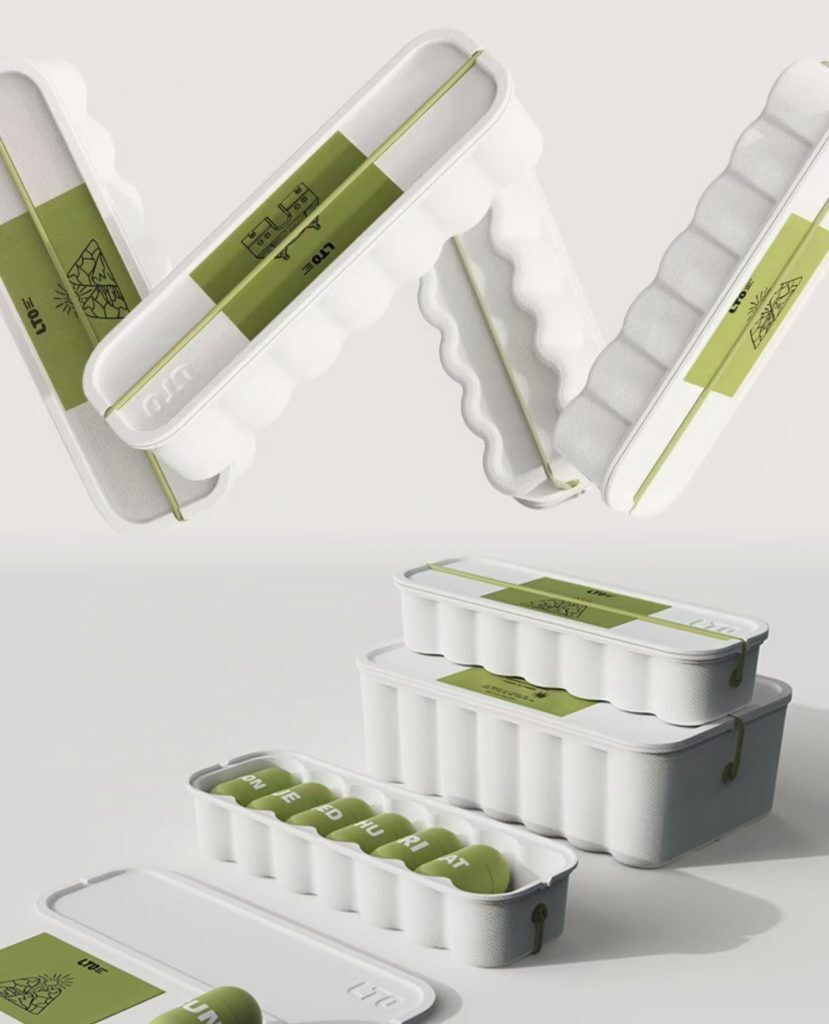
When brand owners and packaging engineers in the health-tech device sector push to meet aggressive corporate sustainability goals, they often run into a frustrating roadblock. Many development teams ask us the same honest question: “We desperately want to eliminate our traditional thermoformed plastic blister trays, but can plant-based molded fiber actually deliver the precision required for delicate medical peripherals and health hardware?”
Our answer is always a definitive: Yes, it absolutely can—and it serves as a high-precision, industrial-grade alternative to plastic.
Transitioning to sustainable materials doesn’t mean sacrificing structural integrity or premium presentation. Today, we are stepping away from generic eco-friendly marketing talk to have a real, engineer-to-engineer conversation about how we design molded pulp to handle your most sensitive devices.
Engineering Failure Modes in Health-Tech Packaging
Through our collaboration with global health-tech and hardware brands, we know exactly what keeps packaging engineers awake at night. In this specialized sector, packaging isn’t just a container; it’s a protective shield. Through our work, we look to eliminate three critical engineering failure modes before your product ever leaves the factory:
- Electrostatic Discharge & Micro-Vibration Damage: During transit, high-frequency micro-vibrations can lead to friction-induced static buildup or micro-displacements in sensitive electronic sensors and diagnostic components. The internal packaging tray must act as a reliable vibration-damping barrier to absorb these kinetic forces.
- Surface Abrasion Under Multi-Point Stacking Pressure: Many consumer health-tech devices—such as smart wearables, diagnostic monitors, or premium wellness gadgets—feature delicate finishes, anodized metals, or soft-touch coatings. Under the heavy downward force of multi-layer warehouse stacking, a rough packaging surface acts like sandpaper, causing cosmetic scuffing at the contact points.
- Tolerance Stack-up in Multi-Component Systems: A typical retail health-tech box holds an ecosystem: the main hardware, a charging dock, specialized cables, and user documentation. If the packaging tray suffers from dimensional instability during manufacturing, the fractional errors compound. This “tolerance stack-up” means components will either rattle loose during shipping or be jammed so tightly that the end-user struggles to pull them out.
The InNature Pack Approach: Achieving Surface Smoothness Consistency
To solve these technical challenges, we don’t rely on guesswork. We rely on strict material formulation and a controlled manufacturing process built for clean, high-end presentation.
Engineered Fiber Blending for Zero-Dusting
We bypass recycled newspaper pulp for high-precision applications. Instead, we formulate a custom blend utilizing premium virgin bamboo pulp and sugarcane bagasse. While sugarcane provides excellent structural rigidity, its fibers are relatively short. To compensate and ensure maximum tensile strength, we blend in a high percentage of long-fiber bamboo pulp. These fibers interlock tightly like a woven textile. This specific structural matrix inherently minimizes fiber breakage, ensuring a clean, dust-free surface that won’t contaminate optical lenses or sensitive electronic contacts.
Controlled Wet-Press Process

To eliminate the risk of surface abrasion, we utilize a standard, highly controlled Wet-Press process. Instead of air-drying the packaging (which creates a rough, fuzzy texture), the wet packaging is transferred directly into precision-engineered metal molds and formed under high temperature and high mechanical pressure.
Depending on the specific dimensions and wall thickness of your component, our engineering team calibrates the exact temperature profile to completely dry and cure the tray within the mold. This irons the fibers flat against the mirror-finished mold walls, yielding an eggshell-smooth tray with exceptional surface smoothness consistency that rivals thermoformed plastic and will never scratch your product’s delicate coating.
Physical Performance: Dimensional Stability Under Load

Solving the problem of tolerance stack-up requires strict structural discipline. At InNature Pack, our engineering approach relies on two core pillars:
- Rigid Geometric Engineering: Through the strategic deployment of geometric ribs, contoured sidewalls, and calculated draft angles, we ensure our plant-fiber inserts maintain absolute dimensional stability under load. The tray will not buckle, creep, or deform under the stress of long-term international transit or warehouse stacking.
- Micro-Tolerance Control: Every project begins with your product’s 3D CAD files. Our engineering team calculates exact material shrinkage rates down to the millimeter. By machining our production molds on high-precision CNC equipment, we deliver custom inserts that provide a satisfying “click-fit” security—holding every accessory snugly in place without allowing room for transit vibration.
Post-Processing Integration: Sterilization Adaptability
We believe in absolute transparency with our B2B partners. We frequently receive inquiries from compliance managers asking if our packaging comes with pre-certified medical-grade sterility documentation.
Let’s be completely upfront: InNature Pack is a material and structural solution provider; we do not supply pre-certified, sterile-system packaging.
However, here is where our material engineering shines: many of our international clients manufacture items like diagnostic kit outer trays, personal wellness devices, or laboratory consumables that require post-packaging sterilization. They take our raw wet-press trays, pack their products, and run the entire assembly through their own in-house industrial sterilization cycles.
Our bamboo and sugarcane fiber matrices demonstrate exceptional stability under common sterilization methods:
- Ethylene Oxide (EO) Gas: The natural micro-porosity of plant fiber allows for highly efficient gas penetration during the sterilization phase and rapid gas clearance during aeration, leaving zero hazardous chemical entrapment.
- Gamma & E-Beam Irradiation: Our pure virgin fibers do not contain the synthetic polymers or chemical impurities that cause recycled plastics to yellow, turn brittle, or emit volatile off-gases under radiation.
While we leave the official sterilization validation to your regulatory teams, we actively encourage and support your machine-compatibility and sterilization testing. We are always ready to provide rapid-prototype samples so your engineering team can run real-world validation tests in your own facility.
Plastic Elimination at the System Level
True sustainability isn’t achieved by just replacing a plastic tray with a paper one while leaving heavy plastic foam inserts in the rest of your shipping configuration. At InNature Pack, we challenge our partners to look at the big picture:
[ Traditional Packaging ] ➡️ Corrugated Box + EPS Foam Blocks + Plastic Trays / Blisters
[ System-Level Redesign ] ➡️ Recyclable Cardboard Box + Integrated Molded Fiber Precision Insert
By engineering clever, integrated cushioning elements directly into a single molded fiber insert, we can often replace both the internal plastic tray and the external expanded polystyrene (EPS) foam cushioning.
When your customer opens the shipping box, they are greeted by a unified, elegant, 100% biodegradable plant-based system. This cohesive “green unboxing” speaks volumes about your brand’s commitment to the environment. Furthermore, it ensures your global supply chain remains fully compliant with the strictest international environmental regulations, such as RoHS and REACH.
Tailored to Your Specifications
You might notice that our website doesn’t feature a standard product category labeled “Medical or Health-Tech Trays.” There is a simple, premium reason for that: every single project in this high-requirement space is an entirely bespoke, confidential creation. We don’t sell generic, off-the-shelf plastic alternatives because your device isn’t generic.
If you are currently designing a next-generation health-tech device, launching a consumer health accessory, or looking to transition an existing high-value instrument line away from single-use plastic trays, let’s collaborate.
Contact the InNature Pack Engineering Team Today. Share your dimensional parameters, request our material compliance datasheets, or coordinate a batch of custom prototype samples to test on your own assembly lines and sterilization equipment. Let’s engineer your sustainable transition together.