
For many home care brands, reducing plastic packaging is no longer just a visual statement on the shelf. It is becoming part of a broader product and supply-chain conversation: how much plastic can be reduced, what materials consumers will accept, how the pack performs in transport, and whether the format still works on an existing filling line.
Paper-based bottles are therefore attracting attention from brands selling laundry detergent, hand wash, dishwashing liquid and household cleaners. A molded fiber outer shell can give a package a natural, tactile appearance while significantly reducing the amount of conventional plastic used in a bottle. But liquid home care products are demanding. The question is not simply whether a bottle looks like paper. The real question is whether the product, barrier structure, closure and filling process work together over the intended shelf life.
This matters at scale. In the EU alone, packaging waste reached 83.4 million tonnes in 2022, or 186.5 kg per person, according to the European Commission’s Eurostat overview. Reducing material use is important, but a lower-plastic package still has to protect the product reliably. A leaking bottle or a pack that fails before use is not a sustainable outcome.
This article looks at where paper bottles may make sense for liquid laundry and home care products, what needs to be evaluated before development begins, and where molded pulp packaging can also support the growing market for solid cleaning products.
Which Home Care Products Are Most Suitable for Paper-Based Bottles?
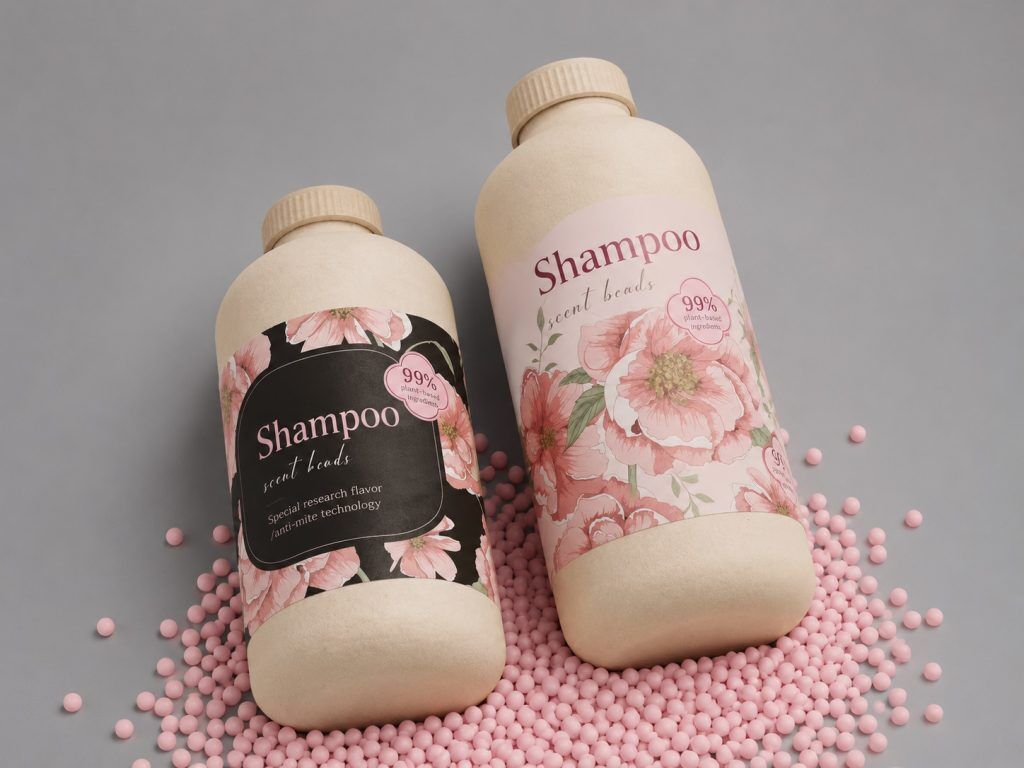
There is no single answer for every product category. Two laundry detergents can look similar on a supermarket shelf while behaving very differently inside a package. Their pH, surfactant system, fragrance, viscosity and storage requirements may all be different.
As a starting point, brands often explore paper-based bottles for relatively mild liquid products such as hand wash, body wash, some neutral household cleaners, or concentrated refill products. These are not automatic fits, but they can be sensible candidates for evaluation.
More challenging products include strongly acidic or strongly alkaline cleaners, products with a high alcohol or solvent content, heavily fragranced formulas, and liquids that must remain stable through long periods of hot and humid storage. Laundry detergents also need individual assessment. A gentle detergent and a highly alkaline concentrated laundry product should not be treated as the same packaging project.
That is why a responsible discussion starts with the actual formula and use conditions, rather than a general claim that paper bottles can replace plastic for all home care liquids. The goal is to identify a realistic starting point and test it properly.
Compatibility Matters More Than Appearance
A paper bottle has to do much more than look premium on a shelf. For liquid applications, the molded fiber shell is normally combined with an internal barrier structure that keeps the liquid contained and helps preserve the bottle’s shape and appearance.
The liquid may stay in contact with this inner structure for months. Meanwhile, the bottle can experience temperature changes during filling, warehousing, sea freight, retail display and use in the consumer’s home. Even a small compatibility issue can become visible over time as leakage, swelling, softening, delamination, odor change or surface deterioration.
Before a project moves into tooling, it is useful to review the following points:
- Product pH and whether the formula is strongly acidic or alkaline
- Main surfactants, solvents, alcohols, essential oils or fragrances
- Product viscosity and expected dispensing method
- Target shelf life after filling
- Filling temperature and whether the product needs sterilization or another high-temperature process
- Expected transport routes and storage conditions
A Safety Data Sheet is often a good first reference. It may not answer every packaging question, but it gives the packaging supplier and brand a more informed basis for an initial assessment. If possible, providing a small quantity of the actual product for testing is even more useful.
The Barrier Layer: Reduced Plastic and Plastic-Free Are Different Choices


“Paper bottle” can describe several very different structures. It is important for brands to understand that a bottle with a molded pulp exterior and a thin internal liner is not the same as a fully plastic-free format.
A reduced-plastic structure uses fiber as the main visible and structural component, with a lighter inner barrier layer to hold the liquid. Compared with a conventional all-plastic bottle, this can substantially reduce plastic use while offering more dependable liquid resistance. Depending on the application, the inner layer may also be designed with separation or end-of-life considerations in mind. The exact recycling outcome still depends on local collection and sorting systems, so it should never be oversimplified in marketing claims.
A fully plastic-free option may be attractive for a brand story, especially when the product is dry or has a short and controlled use period. For liquids, however, it can bring additional limitations. Bottles may have less resistance to prolonged moisture exposure; the bottle mouth can feel more like a paper cup after opening; and fibers around the opening may affect the user experience. High heat and humidity can create further risk.
Neither approach is automatically “better.” The right choice depends on the formula, desired performance, target market and environmental objective. In many liquid home care projects, reducing plastic while maintaining dependable protection may be a more practical first step than insisting on an entirely plastic-free structure from day one.
Closures, Sealing and Everyday Use
The bottle body is only one part of the system. For laundry detergent and home care products, the closure can be just as important as the fiber shell.
A hand wash product may need a pump that dispenses cleanly and works repeatedly. A laundry detergent may need a dosing cap, a flip-top closure or another format that helps consumers control the amount used. A household cleaner may need a trigger sprayer, child-resistant feature or a secure induction seal. Each choice affects leak prevention, consumer convenience and the amount of plastic in the final pack.
Key questions include:
- Does the closure create a reliable seal during transport?
- Will the product remain leak-free when the bottle is stored upside down or on its side?
- Can the consumer open and reseal it comfortably many times?
- Is the neck finish compatible with the preferred cap, pump or dosing system?
- Does the package still feel clean and pleasant after repeated use?
For a brand moving from a standard plastic bottle, retaining a familiar dosing cap can sometimes make consumer adoption easier. In other cases, a new closure may be needed to match the paper bottle structure. It is best to assess this early, rather than treating the cap as a final detail after the bottle design is complete.
Filling, Transport and Shelf-Life Testing
An attractive sample is an important milestone, but it is not the same as a production-ready pack. Before mass production, the complete packaging system should be tested under conditions that reflect how it will actually be filled, shipped and used.
Filling temperature, filling speed, cap application torque and bottle handling can all influence results. A line designed for a conventional plastic bottle may need minor adjustments for a paper-based bottle. Brands should also confirm how bottles will be oriented in cartons, how many layers will be stacked on a pallet, and whether the shipping route includes hot or humid conditions.
Useful tests may include leak testing, inversion testing, compression and stacking checks, and accelerated temperature and humidity testing. Long-term compatibility testing is also important for liquid products. The team should inspect not only visible leakage but also swelling, loss of rigidity, odor changes, changes in color, surface damage and any separation between materials.
Not every home care package needs every possible laboratory test. The testing plan should match the product’s risk level and real distribution conditions. What matters is that the brand does not rely only on a short visual check after filling. A package can look fine on day one and show problems only after prolonged contact or exposure to a challenging environment.
When a Paper Bottle May Not Be the Best Choice
Paper-based bottles are not a universal replacement for all plastic packaging. If a product is highly corrosive, requires a very high barrier, must undergo high-temperature processing, or needs an exceptionally long shelf life in difficult climates, another format may be more suitable at the current stage of development.
This does not mean the brand has to abandon its sustainability goal. It may be possible to reduce plastic through a concentrated formula, a refill system, a lighter conventional bottle, or a different paper-based packaging format. A product can also use molded pulp for secondary packaging, e-commerce protection, promotional gift sets or retail display components even when the primary liquid container still needs to be plastic.
Being clear about these limits builds a better project. It prevents costly tooling changes later and helps the brand make claims that match real-world package performance.
Solid Cleaning Products: A Natural Opportunity for Molded Pulp Packaging

Solid and concentrated cleaning products are also becoming more visible. Laundry sheets, dishwasher tablets, cleaning tablets, powders and solid refill systems can reduce the need to transport water and may avoid some of the barrier challenges associated with liquid products.
These products may not need a paper bottle at all, but they can be an excellent fit for custom molded pulp packaging. A molded fiber insert can hold individual products securely, separate a starter kit into compartments, protect fragile accessories, or create a more premium unboxing experience for a gift set. It can also replace foam or plastic inserts in e-commerce packs.
For brands launching a solid cleaning format, molded pulp offers a useful combination of structural protection and a natural material appearance. Custom embossing, debossing and carefully designed cavities can help the packaging feel intentional rather than like a generic shipping insert. The design should still be practical: it needs to protect the products, be easy to pack and avoid unnecessary complexity that adds cost without improving the customer experience.
What to Prepare Before Starting a Custom Project
The fastest way to move from an initial idea to a meaningful packaging assessment is to share the right information early. For a liquid paper bottle project, brands should ideally prepare the target capacity, product type, formula or SDS information, expected order volume, preferred closure, current bottle sample or drawing, filling method and target sales market.
For a molded pulp insert or solid-product pack, the key inputs are usually product dimensions, weight, number of items per set, outer carton size, desired material appearance and expected annual volume. Photos, physical samples and simple 3D files can all help speed up the design review.
Custom tooling is an investment, so it is also helpful to distinguish between an early prototype stage and a production stage. A prototype can confirm fit, appearance and basic handling. Production tooling should only be finalized once the major dimensions, material direction and packaging function are clear.
Start With the Right Product, Not Just the Right Bottle
Paper bottles can be a promising route for laundry and home care brands that want to reduce plastic and create a more distinctive packaging experience. But the most successful projects begin with a realistic match between the product, barrier structure, closure, filling process and testing plan.
For liquid products, the best first step is to evaluate the actual formula and real distribution conditions. For solid cleaning products, custom molded pulp packaging may offer a faster and more flexible way to replace plastic inserts or create a premium paper-based presentation.
If you are planning paper-based packaging for a laundry, hand wash or home care product, share your product type, capacity, formula information and expected volume. A practical review at the beginning can help identify the most suitable molded pulp packaging direction before time and tooling costs are committed.